
Africa is fast emerging as one of the most critical trading partners for the United Arab Emirates. As the global economy pivots toward emerging markets, Africa’s status as the most promising commercial frontier of the new millennium is undeniable. The UAE has been remarkably quick to recognize this immense potential, actively deploying sovereign capital and private sector expertise to deeply integrate its logistics and trade networks with the African continent. Dubai’s leadership has consistently singled out Africa as a premier business partner for the coming decades. Trade between the UAE and Sub-Saharan Africa has registered explosive growth. The UAE has successfully transformed itself from a regional Middle Eastern hub into the indispensable global gateway connecting Africa to Asia, Europe, and the Americas. Latest Economic Developments: The CEPA Era In 2025 and 2026, the UAE dramatically accelerated its African integration through the aggressive rollout of Comprehensive Economic Partnership Agreements (CEPAs). By signing landmark free-trade pacts with key economies like Kenya, Mauritius, and the Republic of Congo, the UAE is systematically eliminating non-tariff barriers, reducing customs duties, and securing preferred access to African markets. This diplomatic and economic offensive has catapulted the UAE's total non-oil trade with Africa to well over $60 billion annually, creating unprecedented opportunities for Dubai-based re-exporters and logistics firms. Simultaneously, the UAE is driving a massive wave of Foreign Direct Investment (FDI) into African infrastructure to support this trade boom. Dubai-based DP World has committed billions to expand deep-water ports and inland logistics parks in Senegal, Angola, and Somaliland, effectively hardwiring Africa's export corridors to the Jebel Ali Free Zone. Furthermore, state-backed green energy giant Masdar is currently funding gigawatts of solar and wind energy projects across the continent, addressing Africa's severe power deficits while cementing the UAE's position as the leading foreign investor in Africa's sustainable future. UAE Non-Oil Trade with Africa - Overview Data Source: UAE Ministry of Economy | © Africa Business Pages Evolving Trade Partners Trade patterns between the Gulf and Africa have acquired dynamic new dimensions. While historically, South Africa was the primary destination for Emirati capital, nations like Kenya, Tanzania, and Nigeria have rapidly surged to the forefront. Nigeria, in particular, has become a vital destination for UAE exports and re-exports, fueled by its massive consumer base. Tanzania and Kenya, often labeled as the primary gateways to East Africa, serve as crucial distribution hubs for UAE goods moving into the landlocked interiors of Uganda, Rwanda, and the DRC. Uganda, too, is making rapid strides to emerge as a leading commercial center. Recognizing the importance of these progressive economies, hundreds of Middle Eastern companies regularly participate in massive regional trade fairs in Kampala and Nairobi, eager to establish long-term distributorships. The COMESA Connection Trade between the UAE and the Common Market for Eastern and Southern Africa (COMESA) has witnessed exponential growth. COMESA is the largest economic bloc on the continent, boasting 21 member states and a combined population of over 600 million consumers. Dubai recognizes COMESA as a unique, highly unified market and has positioned itself as the fundamental hub for trade flowing into and out of the region. The Dubai Chamber of Commerce actively champions this relationship, opening multiple international representative offices across East and West Africa to facilitate bilateral trade, assist Emirati companies in navigating local regulations, and provide African importers with direct access to vetted Dubai suppliers. Top 7 Non-Oil Exports from UAE to Africa Data Source: UAE Ministry of Economy / UN COMTRADE | © Africa Business Pages Farmlands, Food Security, and Telecommunications Beyond traditional consumer goods, GCC nations have increasingly invested in African agriculture to ensure domestic food security. The UAE, reliant on food imports, has deployed sovereign entities like ADQ to acquire strategic stakes in major agricultural supply chains and secure vast tracts of arable land in countries like Sudan and Tanzania. These multimillion-dollar deals provide critical capital to overhaul poverty-stricken rural areas while building modern farming infrastructure. The telecommunications sector remains another crown jewel of UAE-Africa relations. UAE telecom giant "e&" (formerly Etisalat) has been at the forefront of digitizing the continent. Operating heavily under the "Moov Africa" brand, the company controls vast network infrastructures across West and Central Africa—including Benin, Ivory Coast, Gabon, and Togo. By pumping billions into mobile broadband expansion, e& is ensuring that Africa’s tech-savvy youth remain connected to the global digital economy. With Africa predicted to solidify its status as the engine of global growth in the coming decades, the UAE has perfectly positioned itself. Truly, Africa is the market of tomorrow, and Dubai is its global gateway. Did You Know? A Global Heavyweight: The UAE is currently the fourth-largest foreign direct investor in Africa globally, trailing only behind superpowers like China, the EU, and the United States. The Business Magnet: As of 2026, over 25,000 African-owned companies are officially registered and operating within the Dubai Chamber of Commerce, utilizing the city as their global base. Unmatched Aviation Links: Emirates Airlines and flydubai dominate African airspace, offering direct passenger and cargo flights to over 25 major destinations across the continent. Logistics Dominance: Dubai-based DP World is the largest port operator in Africa, managing critical deep-water terminals and logistics hubs in more than 10 African nations. The CEPA Strategy: The UAE is aggressively signing Comprehensive Economic Partnership Agreements (CEPAs) with African countries to drastically reduce import tariffs and supercharge bilateral trade.
Tracking Global FDI in African Farmland Total Land Acquired 0 ha Total Investment $0 Primary Target Crops Click nodes on the map for detailes.© Africa Business Pages

The Africa Markets: Moving Ahead
folder_open Business Outlook
Africa’s rapid economic growth is creating substantial new business opportunities that are often overlooked by global companies. The African market today in undoubtedly one of the most lucrative and profitable business destination. Analysts project that industries, agriculture, resources, and infrastructure – together could generate as much as $2.8 trillion in revenue for African countries annually by the year 2025 – or $1 trillion more than what it generates today. Africa’s collective GDP, at over $1.5 trillion in 2020, is now roughly equal to the large economies of Brazil or Russia. While Africa’s increased economic momentum is widely recognised, less known are its sources and likely staying power. Natural resources directly accounted for just 24 per cent of the continent’s GDP growth from 2010 through 2020. Experts believe that the key to Africa’s growth surge were improved political and macroeconomic stability and microeconomic reforms. It is forecast that future economic growth in Africa will be supported by the continent’s increasing ties to the global economy. Rising demand for commodities is driving buyers around the world to pay dearly for Africa’s natural riches and to forge new types of partnerships with African producers. And Africa is gaining greater access to international capital; total foreign capital flows into Africa rose from $15 billion in 2000 to a peak of over $120 billion in 2019. Today the rate of return on foreign investment in Africa is higher than in any other developing region. Early entry into African economies provides opportunities to create markets, establish brands, shape industry structure, influence customer preferences, and establish long-term relationships. Business can help build the Africa of the future. The rise of the African urban consumer also will fuel long-term growth. Today, 40 per cent of Africans live in urban areas, a portion close to China’s and continuing to expand. The number of households with discretionary income is projected to rise by 50 per cent over the next 10 years, reaching 128 million. By 2030, the continents’ top 18 cities could have a combined spending power of $1.3 trillion. In recent times, there has been a scramble for the resources and markets of Africa. China, India and Brazil, among others, are competing with African countries’ traditional trading partners, from Europe and America, to win access to the continent’s commodities. China and India in particular are funding and building economic and social infrastructure projects across the continent. BRICs countries – Brazil, Russia, India and China – are expected to play a significant role in the future growth of Africa. The global recession and its recovery have been nourishing these so-called South-South ties and recent reports that: • By 2025, BRIC-Africa trade will have increased threefold, to over $750 billion from $155 billion in 2010. • BRICs share of Africa’s total trade will increase from one-fifth today to one-third in the next five years. • BRICS foreign direct investment stock in Africa will swell to more than $150 billion from around $80 billion today. Notably, a host of companies from the BRIC are now playing a larger role in the international arena. In 2019 alone, 231 (or 11.5 per cent of the total) companies listed in the Forbes Global 2000 originated in the BRICs – up from only 83 companies (four per cent) in 2015. Undoubtedly, the writing is on the wall – BRIC-Africa partnership is going to shape the future of global economy in years to come. Companies and businesses from BRIC operating in Africa are outpacing American and European rivals through lower prices, faster action, and a greater willingness to work in difficult environments. However, there’s a great deal of negative publicity surrounding many African countries, and that tends to be all that people hear about. But in reality there are 54 countries on the continent and in many of them, there are an enormous amount of positive things happening. There are extraordinarily promising possibilities in agribusiness, infrastructure, and tourism. The best possibilities are in the southern half of the continent, countries like Mozambique, South Africa, Mauritius, and Namibia. Ghana has enormous potential in its ports, fisheries, and tourism, as does Botswana. As more and more opportunities present themselves, Africa is sure to emerge as one of the most profitable places to do business with – those who do not take notice of Africa’s tremendous potential in the coming years surely risk getting left behind in the race. Related Articles

Electronics and Household Appliances Market in Dubai - A major supplier to African countries
folder_open Business Outlook
Row upon row of glittering shops in Dubai's fabled souks and mega-malls, stacked ceiling-high with the latest attractions from the world's leading consumer electronics manufacturers, present a sight that lures shoppers from around the globe. Electronics, alongside gold, has always been one of Dubai's greatest commercial attractions. The finest products from the best-known international brands are available here at what are, undoubtedly, some of the most competitive wholesale and retail prices in the world. The electronics market has had a dynamic evolution in the Emirates. In the initial stages, domestic demand drove the importation of basic household appliances. As the trade gained sophistication, Dubai emerged as the undisputed re-export epicenter for the Middle East, the CIS (Confederation of Independent States), and the Indian sub-continent. However, as those markets matured and stabilized, a massive new wave of demand emerged: the African continent. Today, African buyers have firmly established themselves as the premier bulk purchasers of consumer electronics and home appliances in Dubai. Capitalizing on Dubai's unmatched logistics and shipping infrastructure, African traders consolidate massive containers of high-demand goods—ranging from Smart TVs and smartphones to refrigerators and air conditioners—shipping them back to fast-growing consumer markets in East, West, and Central Africa. Africa's' Consumer Electronics and Home Appliances Market The African consumer electronics and home appliance sector is currently undergoing a massive digital and financial revolution, heavily driven by mobile technology. The integration of "Pay-As-You-Go" (PAYG) micro-financing platforms, linked directly to mobile money services like M-Pesa, has democratized access to premium electronics. Millions of African households that previously lacked the upfront capital can now comfortably afford solar-powered televisions, energy-efficient refrigerators, and smartphones. This financial innovation has caused retail volumes to skyrocket, prompting wholesale buyers in Dubai to dramatically increase their export orders to keep pace with the surging continental demand. Concurrently, the implementation of the African Continental Free Trade Area (AfCFTA) is reshaping distribution networks. While Dubai remains the paramount global sourcing hub for the latest top-tier international brands from Asia and Europe, the AfCFTA has streamlined how these goods move once they land on African shores. Products arriving at major ports in Mombasa or Lagos can now move seamlessly across regional borders to landlocked nations with significantly reduced tariffs. This streamlined logistics chain allows African distributors to operate with higher margins and faster turnaround times, cementing Dubai's role as the indispensable primary supplier to a unified African market. Top African Markets for Consumer Electronics Data Source: Africa Business Pages Market Intelligence | © Africa Business Pages The Dubai Sourcing Advantage There are several critical reasons why Dubai's electronics and home appliances market is incredibly attractive to African buyers. The city boasts a highly organized chain of global retailers and wholesalers, an impeccably efficient customs network, and massive, state-of-the-art warehousing facilities in free zones like Jebel Ali. Low import duties and direct supplies from global manufacturers keep Dubai's wholesale prices consistently 15-20 per cent lower than other regional markets. As Dubai solidified its position as the ultimate marketplace for the Middle East and Africa, global electronics giants—including Sony, Samsung, LG, and Panasonic—shifted their regional operations directly into the UAE. By establishing massive assembly and distribution facilities within Dubai, these multinational corporations have optimized their ability to feed the high-consumption markets of Africa and the Indian sub-continent rapidly. With the exponential rise of the African middle class, the demand for smart, energy-efficient home appliances and personal electronics will only continue to surge. The UAE, with its strategic location and unparalleled distribution network, stands perfectly positioned to reap rich dividends by catering to this historic economic expansion. Did You Know? The Mobile Heavyweight: Africa is the fastest-growing mobile phone market in the world, with smartphone penetration projected to reach over 85% across Sub-Saharan Africa by 2030. Energy-Efficient Demand: Due to unpredictable power grids, the highest-selling home appliances in Africa are ultra-low-wattage and DC-powered refrigerators and televisions designed specifically for solar setups. A Youthful Consumer Base: Over 60% of Africa's population is under the age of 25. This digital-native demographic is driving massive spikes in the sales of gaming consoles, laptops, and smart wearables. Dubai's Strategic Dominance: It is estimated that over 45% of all imported consumer electronics sold in East Africa transit directly through or are sourced from wholesale markets in the UAE. The Rise of E-Waste Recycling: As electronics consumption booms, countries like Rwanda and South Africa are leading the continent in establishing state-of-the-art e-waste recycling plants to create circular tech economies.

Business in Africa
folder_open Business Outlook
Africa is experiencing its highest economic growth in decades and is the focus of growing international attention by global business enterprises. As the new millennium takes shape, Africa is increasingly becoming an exciting place to do business. Analysts estimate Africa’s current economic growth at about five per cent – an impressive performance considering the prevailing economic situation worldwide. “Africa is undergoing unprecedented political and economic change, with a ‘democratic tide’ sweeping across the continent,” says Syeda Bbumba, Uganda’s former minister for Economic Monitoring during an interview with Africa Business Pages Magazine in Kampala. “As democracy takes root and spreads,” she noted, “it brings with it the concepts of predictability, accountability and the rule of law which are all essential to building a climate of business confidence and productive investment.” As a result of liberalisation and deregulation, Sub-Saharan Africa’s per capita growth rates advanced from stagnation in the 1980s to an average of 5 per cent in 2020, with some countries attaining 8-10 per cent-per capita growth rates. Besides implementing democratic reform, many African nations who are undertaking an equally impressive wave of economic policy reform. “More than 30 countries have instituted programs to dismantle their long discredited state-controlled economic systems and replace them with free enterprise,” pointed out Syeda Bbumba. Looking ahead, the trend for higher growth in Africa looks increasingly promising. “As economic reforms are implemented, African countries will become larger players in the global trading system,” she said. Citing trade figures, Syeda Bbumba said sub-Saharan Africa imported approximately $350,000 million in goods and services, while combined exports approached $200,000 million. The United Arab Emirates, she explained, now ranks as one of East Africa’s leading supplier. “UAE exports grew substantially last year and the country is expected to emerge as East Africa’s leading supplier in the years to come.” She said Uganda encourages greater regional cooperation and liberalization across Africa because such a policy will only promote and enhance more trade. “The benefits of regional groupings like the Southern Africa Development Community (SADC), the East Africa Community (EAC) and the West African Economic and Monetary Union (UEMOA) are substantial,” she said. “Lowering trade barriers among African countries forges larger markets, which in turn encourages investment and fosters industries capable of competing in global markets,” she explained. What is equally promising when one looks at Africa, she recalled, is that African countries are willing to accept international trading conventions. “At last count, 40 African countries had joined the World Trade Organisation and three more were working to accede. She concluded by noting that: “We are determined to build strong and lasting partnerships with developed and developing countries. “This is a particularly exciting time to be doing business in Africa,” she said. “The region is experiencing its highest growth in decades, and is poised for unprecedented economic growth. Africa today is a focus of attention as never before,” she said. Africa’s transformation is fueling its economic resurgence and generating commercial opportunity as never before. Africa’s outlook for 2020 is also promising. As economic reforms are implemented, African countries will become larger players in the global trading system. The market for consumer goods and services in Africa has so far been concentrated in a handful of countries. South Africa, Nigeria, Ghana, Angola, Ethiopia, Ivory Coast, and Kenya are important markets Africa. Exports to Africa consist mainly of oil and gas, telecommunications equipment, agro-machinery, foodstuff, motor vehicles, construction machinery, stationery, cosmetics, consumer electronics, industrial chemicals, and computer hardware and accessories. More than 680,000,000 people live in Africa, and the population of the continent is rapidly expanding. The peoples of Africa currently make up only 10 per cent of the world’s population. Contrary to popular belief, Africa, as a continent is not overpopulated, although the density of population around urban areas has been growing at a rapid pace. Although Africa is the second largest continent, its population density in some regions is rather low compared to many places around the world, specially Asia. This is due in part to the Sahara Desert, which occupies as much as one-fourth of Africa’s landmass and is not suitable for habitation. In those areas that can support agriculture, the population density is higher and is closer to the world average. These areas comprise of main cities and urban centres. In the African countries with a more developed economic base, the birth and death rates are much lower than many other countries around the world. In less developed countries the birth rate is much higher, but so is infant mortality as well as the death rate. Famine, diseases, and wars over the last few decades have also affected population growth. Africa’s total population is not as high as many people think it to be. In fact, in certain countries and areas in Africa, the population density is much below normal standards, according to UN Population Report. Nevertheless, the continent as whole currently has a population growth rate of 3 per cent. Viewed as a market, Africa does provide immense opportunities for trade and manufacturing. As Africa progresses on its slow albeit steady path to development, many new opportunities are emerging in many developing countries. The demand for consumer and capital goods in Africa has reached unprecedented levels, and several overseas companies are now targetting Africa as a market of tomorrow. Previous Next

The African Transformation
folder_open Business Outlook
There was a time when Africa was was seen as a poor and backward area. Many economists believed that African countries were better off poor because wealth – especially resources that could be sold on international markets – inevitably fueled civil wars. Not any more. The new thinking now is to share Africa’s wealth more equitably. That’s right: Africa’s wealth. Today, a diverse group of determined African technocrats – from Ghana to Uganda, Zambia to Kenya, South Africa to Rwanda – have joined forces with technologically savvy, globally oriented capitalists to launch a quiet revolution in development thinking. In time, their changes have helped lead to Africa’s dramatically improved economic performance, and greater prosperity. Sample this: six of the world’s ten fastest-growing countries are in sub-Saharan Africa – Angola, Nigeria, Ethiopia, Chad, Mozambique, and Rwanda. In eight of the past ten years, sub-Saharan Africa has grown faster than Asia. By 2025, the International Monetary Fund expects Africa to grow at a rate of 6 per cent, about the same as Asia. By 2035, Africa’s labour force will be bigger than that of any individual country in the world, which offers the continent a chance to reap a demographic dividend, using its young and growing workers to boost economic growth. A new consuming class has taken its place: since 2000, more than 40 million African households have joined the world’s consuming class. At the point when household incomes exceed $5,000, measured at purchasing power parity, consumers begin to direct more than half their income to things other than food and shelter. The continent now has around 90 million people who fit this definition. That figure is projected to reach 150 million by 2025. The experience of other emerging economies shows that Africa could accelerate its creation of stable jobs dramatically. When they were at a similar stage of development as Africa today, Thailand, South Korea and Brazil generated jobs at double or triple the rate of Africa’s. This would lift millions more Africans out of poverty and vault millions of others into the consuming class. It would also cut the time needed to reach East Asia’s percentage of stable employment by more than half, from over 50 years to just 20 years. Africa’s most developed economies, such as South Africa, Morocco and Egypt, are on track to create more wage-paying jobs than new entrants to the workforce. Three sectors have a proven capacity to create jobs and can do so in the future: agriculture, manufacturing, and retail and hospitality. Africa has about 60 per cent of the world’s unused cropland, providing it with a golden opportunity to simultaneously develop its agricultural sector and reduce unemployment. On current trends, African agriculture is on course to create 8 million wage-paying jobs between now and 2025. Lesotho, a country of just 2 million people, has 100 times South Africa’s exports of apparel to the United States on a per capita basis because it made investment attractive to foreign players and put the necessary rail and distribution infrastructure in place. So what has realy changed? Partly, the boom in commodities. Sky-high copper prices have lifted copper-rich Zambia. Record cocoa prices are bringing $2 billion annually into Ghana. Kenyan farmers, mostly small, are responsible for $1 billion in annual exports of fruits, vegetables, and flowers, a figure that dwarfs the country’s traditional coffee and tea exports. And, of course, high demand for oil and gas has helped a number of countries enormously. But even countries without such natural resources, such as Rwanda, have seen significant gains, mostly because of improved economic governance and the return of money and skills from Africans who left their countries during the bad days. Rwanda, for instance, long an importer of food, now grows enough to satisfying the needs of its people, and even exports cash crops such as coffee for the first time. Technology also plays an important part in the new African boom. Probably the most astonishing development success since 2000 in Africa has been the communications revolution. A dozen years ago, merely making a phone call (or receiving one) was virtually impossible even in Africa’s most important commercial centres. An elite business person might hire two or three people fulltime simply to repeatedly dial phone numbers over the crumbling, puny, and perversely sub-optimal government-owned telephone systems. Nigeria, at the time a country of 100 million people, had at most 100,000 working dial tones. It was not remarkable for one call out of every 50 made to be completed. Naturally, the effect on productivity was devastating, but equally as bad was the sense of isolation. Everything had to be done face to face, consigning people to long trips for even trivial maneuvers. Waiting became a way of life. No longer. The advent of mobile telephones has brought instant communications to hundreds of millions of Africans, rich and poor, urban and rural. Africans are now on the move. Text messaging and digital money-transfer services, such as Safaricom’s M-pesa in Kenya, have transformed ordinary life. Yet this most visible of all African advances, this gigantic step forward in linking Africans to each other and to people around the world, occurred with virtually zero assistance from the professional development community of donors and economists, aid workers and development agencies. Uniformly, these “experts” said Africans were simply too poor to benefit from mobile telecommunications, so they provided scant assistance in the 1990s and early 2000s when African governments, in the main, relaxed their long hegemony over telecommunications and permitted private companies to lead the push into mobile phones. Some Africans have made fortunes. The Sudanese engineer Mo Ibrahim even became a billionaire from piecing together a regional network of mobile companies. In virtually every single African nation, the leading mobile phone company is now the leading taxpayer to the government, the leading local donor to local causes, and one of the leading employers. But more important than the economic impact of the mobile revolution was the mental impact. The twin values of self-reliance and exceeding expectations were cemented by the success in mobile telephony, which compelled development experts to rethink their commitment to African under-development. The striking improvements in living standards in Africa, especially for small farmers, have triggered a new optimism about the prospects for the continent. Expectations are radically different now. Now the question increasingly asked is how Africans can share their wealth more equitably. Inequality in sub-Saharan is rising even as, in most countries, the basic standard is also rising. Previous Next
The Emerging Markets of Africa
folder_open Business Outlook
With all of the attention historically placed on volatile stock markets and governments around the world bailing out global financial systems, one might assume that investing in an emerging economy like Africa would be the furthest thing on the minds of international investors. However, that is entirely incorrect. Capital markets across Africa are booming, and institutional funds focusing on sub-Saharan Africa have exploded in the past few years. In fact, with regional market capitalizations expanding rapidly, Africa's stock markets present a dynamic growth frontier similar to Central Europe and Russia in the mid-1990s when they first opened up to foreign capital. Consider this: Sub-Saharan Africa consists of 48 countries and currently boasts a rapidly urbanizing population of over 1.2 billion people. That's almost quadruple the population of the United States (340 million) and is quickly catching up to India (1.4 billion) and China (1.4 billion). South Africa, possessing the most highly capitalized and developed financial sector in the region, dominates economically, but it is no longer the sole player. Before 1990, only five sub-Saharan African countries had formal stock markets; today, there are over 29 stock exchanges representing 38 nations, including vibrant bourses in Ghana, Kenya, Nigeria, and Uganda. Between 2010 and the current decade, the capitalization of African stock markets has multiplied remarkably—an outstanding growth trajectory by any standard. USA vs. China: Trade Volume with Africa The shifting economic landscape from 2000 to 2023 *Note: US FDI Stock ($46B) currently remains slightly higher than China FDI Stock ($44B). Trade Volume (Billions USD) | © Africa Business Pages China has steadily expanded its global trade footprint and now surpasses the U.S. as the leading trading partner in many regions around the world. In Africa, for instance, China overtook the U.S. as the continent’s top trading partner back in 2009 — a position it continues to hold today. According to the Carnegie Endowment for International Peace, there has been a dramatic shift in economic influence in Africa, in terms of trade partnerships between the continent, China, and the United States over a twenty-year period. Today, 52 out of the 54 recognized African nations — accounting for 97% of the African continent — now count China as their primary trading partner over the U.S. Only two small Southern African nations, Eswatini and Lesotho, remain as primarily U.S. trading partners in Africa. Undoubtedly, the overwhelming success of China's economic expansion strategy in Africa over the last two decades depicts a massive realignment of African trade dependencies, shifting almost entirely from the West towards Beijing. The Rise of Africa's Top 20 Economies (1990 - 2022) Historical Real GDP (Billions USD) | © Africa Business Pages Global financial institutions continuously rank Africa as home to some of the world's fastest-growing economies. While legacy giants like India and China stabilize, sub-Saharan Africa is projected to consistently outperform global averages, with regional GDP growth expected to steadily climb past 4.5% to 5.5% in the coming years. Inflation across most major hubs is largely being brought under control through tight monetary policies. Mobile phone penetration is soaring past 85%, boosting economic inclusion at unprecedented rates. Banking systems are rapidly expanding innovative digital services to serve the surging middle class. Consequently, foreign direct investment (FDI) into the continent has grown immensely, driven by diversified portfolios rather than just traditional oil and gas. A recent economic poll interviewed hundreds of highly qualified native Africans educated at top global universities who are actively returning home to build their careers on the back of Africa's emerging capital markets. That "brain gain" projects a profoundly different image to the world than the historical stereotypes of the 1970s. Sub-Saharan Africa Real GDP Growth - Overview Estimated Real GDP Growth Rate (%) | © Africa Business Pages Africa: The Market of Tomorrow 1. The AfCFTA Catalyst: The operationalization of the African Continental Free Trade Area (AfCFTA) is arguably the most significant economic milestone in the continent's modern history. By dismantling tariffs and harmonizing trade protocols across 54 nations, it has created the world's largest single market by participating countries. This integration is rapidly boosting intra-African trade, allowing local manufacturers to achieve economies of scale and positioning the continent as a highly competitive global manufacturing hub. 2. The Tech and Fintech Explosion: Africa has bypassed legacy infrastructure, leaping directly into the digital age. The continent is the undisputed global leader in mobile money, processing hundreds of billions of dollars annually. Venture capital has flooded into "Silicon Savannah" in Kenya and "Yaba Valley" in Nigeria, backing a new generation of billion-dollar tech unicorns. These startups are digitizing the massive informal sector, revolutionizing cross-border payments, and providing credit to millions of previously unbanked entrepreneurs. 3. The Critical Minerals Supercycle: As the global economy races toward a green transition, Africa has become the epicenter for critical minerals. The continent holds vast reserves of lithium, cobalt, copper, and platinum—materials absolutely vital for electric vehicle (EV) batteries and renewable energy infrastructure. African governments are now shifting policies from merely exporting raw ores to demanding local beneficiation, attracting billions in FDI to build domestic refineries and battery assembly plants. 4. Mega-Infrastructure and SEZs: Recognizing that logistics remain a primary hurdle, a massive continent-wide infrastructure boom is underway. Mega-projects such as deep-sea ports in West Africa, Standard Gauge Railways (SGR) in East Africa, and transnational highway corridors are aggressively slashing freight costs. These transport arteries are flanked by state-backed Special Economic Zones (SEZs), which offer generous tax holidays and reliable energy to foreign investors, further accelerating industrialization. Skeptics may ask why one should risk capital in Africa when established western markets offer safe havens. Here is the undeniable truth: the greatest investment opportunities lie where perception differs significantly from reality. Much like Russia and Central Europe in the early 1990s, Africa fits that bill perfectly. In 1996, the entire market capitalization of Russia and Central Europe was less than $30 billion. Decades later, it evolved into a multi-trillion-dollar market. You do not need to be a starry-eyed optimist to realize the exact same economic logic currently applies to the African continent. Did You Know? The Middle-Class Boom: Africa's middle class is expanding faster than any other region globally, driving massive consumer demand for retail, real estate, and financial services. Tech Unicorns: The continent has produced several "Unicorns" (startups valued at over $1 billion), including Flutterwave, OPay, and Interswitch, proving the viability of African digital infrastructure. Global Workforce: By 2035, more young people will enter the workforce in Africa each year than in the rest of the world combined, creating a demographic dividend that global manufacturers are eager to tap into.

Why Africa?
folder_open Business Outlook
Africa has rapidly gained attention as the next investment hotspot and is being called “the final frontier.” A decade ago, the worldwide boom in investing in emerging markets initially benefited Africa along with other regions, but today many African countries stand out on their own as highly attractive investment opportunities. The African continent is home to seven of the top 10 fastest-growing economies in the world, and foreign direct investment is rapidly increasing. European and Chinese companies of all sizes recognised the African opportunity early on and have a head start. As growth slows in more developed markets, geographic diversification is a logical next step for businesses of all sizes. Many African markets offer attractive opportunities for mid-sized companies, and as an early mover, a company stands to secure the most suitable options as well as the best talent, partnerships, and incentives. While significant risks remain, we challenge those shying away from investing in Africa to consider the following arguments. First, many of the perceived risks are myths. Second, careful analysis will demonstrate that Africa is not a monolith, and an informed investor can find the right fit. Finally, this is not a journey that a mid-sized company has to take alone. Resources and expertise are increasingly available. As a result, mid-sized companies should not ignore Africa’s transformation into a highly attractive business destination. To capitalise on the burgeoning opportunities, the time to act is now. Over the past decade the size of the African economy has more than trebled, with West Africa now the fastest growing region on the continent. This year’s African Economic Outlook report, produced by the African Development Bank, the OECD Development Centre and the United Nations Development Programme, indicates that a favourable macro-economic climate across West Africa means that growth is likely to accelerate above seven per cent in the next year, compared with 5.7 per cent for the continent as a whole. Infrastructure investments in Africa The rate of foreign investment has multiplied ten times over the last decade with massive investments from China, India, Brazil, Malaysia and Turkey in particular. Today the rate of return on foreign investment in Africa is higher than in any other developing region. Nigeria has become the number-one destination for foreign direct investment, overtaking South Africa for the first time in a decade. High-level delegations from north America have pledged vast sums in the country’s energy sector. Rising demand for commodities is driving buyers around the world to pay dearly for Africa’s natural riches and to forge new types of partnerships with producers. And Africa is gaining greater access to international capital. “As was the case at the start of the Asian economic miracle 25 years ago, a relatively small increase in investments in Africa could produce very high productivity improvements. The return on investments in Africa is among the highest in the world. Foreign direct investments are higher than in India,” he says. He believes it is undeniable that Africa has become increasingly integrated into the world economy. Its partners are more and more diversified, opening up unprecedented new development opportunities. “Following independence in the 1960s, we believe that African countries today are taking huge steps, with their economic independence becoming less dependent on their traditional partners. Thus China is on its way to overtake the USA as the main partner.” Africa’s trade with the rest of the world has increased 200 per cent since 2000. Trade with Brazil, China, South Korea, India and Turkey, which used to represent only one per cent, is estimated today at over 30 per cent. It should reach 50 per cent by the year 2030. Regional trade is also booming with a drop in customs duties and a reduction in trade restrictions through African regional integration, says the Ivory Coast president. “What is more, Africa might benefit from the demographic dividend as Asia did thirty years ago. The population of Africa is about one billion. By 2050, it will reach two billion. Today the average age is 20, as compared with 30 in Asia and 40 in Europe,” says Ouattara. He believes that the increasing integration of Africa into the world economy could not have taken place without increased political stability, good governance and democracy, changes of power through elections and the gradual strengthening of institutions. Most African countries enjoy elections that the international community has judged “satisfactory”. “Africa is in the process of succeeding in its economic takeoff, like China 30 years ago and India 20 years ago. However, for this takeoff to be fully achieved, there are some obstacles that Africa must overcome,” says Ouattara. Today, 40 percent of Africans live in urban areas, a portion close to China’s and continuing to expand. The number of households with discretionary income is projected to rise by 50 percent over the next 10 years, reaching 128 million. By 2030, the continent’s top 18 cities could have combined spending power of $1.3 trillion. Previous Next
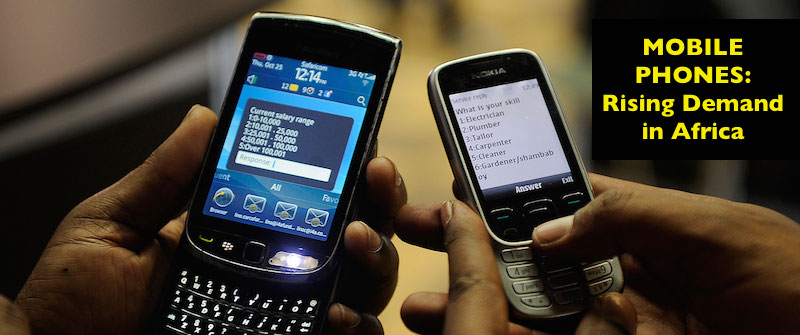
When it comes to digital connectivity, Africa has undergone an unprecedented mobile revolution. As of 2026, the continent has thoroughly cemented its status as a "mobile-first" region. According to recent GSMA Intelligence reports, Africa's mobile subscriber base has shattered early forecasts, surpassing 600 million unique subscribers. In a historic leapfrog over legacy infrastructure, more Africans have connected to high-speed mobile networks in the last decade than the entire global fixed-line rollout of the previous century. The actual growth has baffled international analysts and investors alike. Because vast swaths of Africa previously lacked fixed-line infrastructure—with landlines historically reaching less than 3 percent of the population—mobile networks became the ultimate economic lifeline. In the sparsely populated and extensive African continent, the massive costs of stringing up copper telephone wires were simply never economically viable. Mobile networks, on the other hand, are highly scalable. Today, cell towers rise above mega-cities like Cape Town and Cairo, as well as remote rural villages, defying challenges like rugged terrain, vast distances, and inconsistent power grids. Sub-Saharan Africa: Unique Mobile Subscribers Data Source: GSMA Mobile Economy Estimates | © Africa Business Pages Regional Giants: Nigeria and South Africa The mobile handset market in Nigeria has firmly established itself as an unprecedented economic powerhouse on the continent. With active mobile connections exceeding 220 million in 2026, Nigeria has officially solidified its position as the largest telecom market in Africa, displacing South Africa from the number one spot in terms of sheer volume. With smartphone adoption continuing to surge, Nigeria represents the ultimate growth frontier for global handset manufacturers. South Africa remains a highly lucrative, advanced market, boasting over 115 million connected devices driven by multiple-SIM ownership and mature digital economies. However, the sheer population density of Nigeria, followed closely by rapidly expanding tech hubs in Egypt, Kenya, and Morocco, dominates the African mobile landscape today. It is in the rapidly developing nations that the modern statistics are most startling. The Democratic Republic of Congo, with a population exceeding 100 million, has leapfrogged legacy landlines entirely. While fixed telephones remain practically non-existent, the country now boasts nearly 50 million mobile phone subscribers. Infrastructural challenges, such as a lack of reliable electricity, have not proved to be a hindrance; enterprising roadside vendors have built thriving micro-businesses charging mobile phones using solar panels and deep-cycle car batteries. Top Mobile Markets in Africa Explore the continent's most connected nations. Click on a country's marker or the sidebar leaderboard to view the latest subscriber and penetration data. 5G Expansion and Direct-to-Cell Satellites The African telecom sector in 2026 is defined by rapid technological maturation and the narrowing of the digital divide. We are currently witnessing the aggressive expansion of 5G networks beyond traditional economic hubs into secondary cities, spearheaded by major operators in South Africa, Nigeria, and Kenya. Accompanying this network upgrade is a surge in localized, ultra-affordable 4G/5G "smart-feature phones." These hybrid devices offer touchscreens and app ecosystems at a fraction of the cost of traditional smartphones, driving unprecedented internet adoption among lower-income demographics. Furthermore, the continent is actively solving its notorious rural coverage gaps through groundbreaking Satellite-to-Mobile (Direct-to-Cell) partnerships. Low Earth Orbit (LEO) satellite providers have begun partnering directly with African telecom giants to beam broadband coverage straight to unmodified consumer smartphones. This revolutionary development completely eliminates the need for expensive terrestrial cell towers in isolated terrains, finally bringing reliable, high-speed internet to the most remote agricultural and mining communities across the continent. The Rise of Local Assembly Looking at the great demand for mobile phones and the rising sales figures throughout the African continent, enterprising organizations have recognized the value of localized manufacturing. Pioneers like Zambia-based M-Tech Mobile Communication led early efforts in assembling regional handsets. Today, this trend has exploded, with massive assembly plants opening in Kenya, Rwanda, and Egypt to bypass heavy import tariffs and produce localized smart devices. "We believe in bringing technology closer to the African people by providing world-class products at competitive prices," notes a leading regional distributor. "The business potential of local assembly is enormous, as we will be meeting the rising demand for mobile handsets throughout Africa while creating thousands of local jobs and reducing our reliance on purely imported hardware." Did You Know? The Undisputed Giant: Nigeria is the largest telecommunications market in Africa, with over 220 million active mobile connections as of 2026. Mobile-First Internet: More than 90% of all internet users in Africa access the web exclusively through a mobile device, effectively skipping the desktop computer generation entirely. Solar Charging Economies: In regions with unreliable power grids, off-grid solar charging stations have created a massive micro-economy, allowing rural populations to keep their devices powered year-round. Satellite Broadband: New "Direct-to-Cell" satellite technology is allowing users in remote African villages to get 4G internet directly from space without the need for physical cell towers.
The Booming African Markets
folder_open Business Outlook
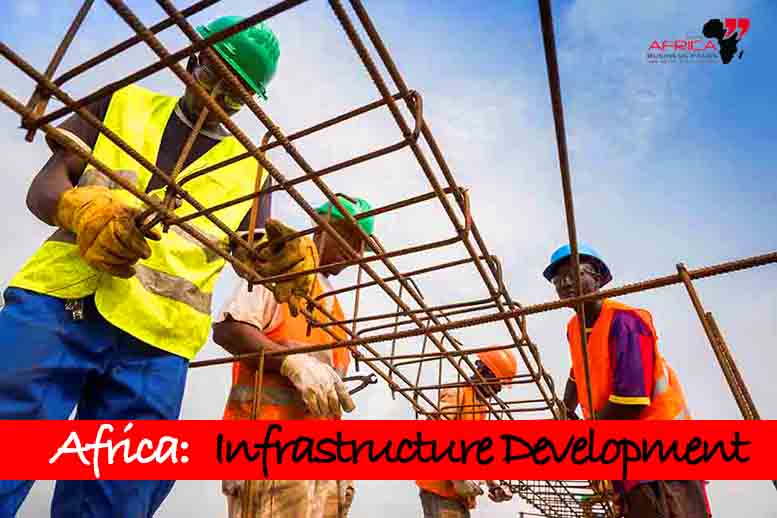
Historically, energy deficits severely hampered continental growth, but massive systemic changes have reshaped the landscape. While estimates once indicated that the African continent lost two percentage points of GDP growth annually as a result of its infrastructure deficit, aggressive national and pan-African electrification and infrastructure mega-projects have radically shifted this trajectory. Today, massive off-grid solar deployments and upgraded power grids are rapidly bridging the gap, bringing electricity to millions of previously unserved households. Multiple cross-border initiatives are currently operational or nearing completion, including interconnected highways, standard-gauge railways, deep-water ports, and modernized green-energy power plants. Mega-partnerships, such as the collaborative plans between the African Union and international partners to develop integrated road, rail, and air transport corridors, are unifying the continent's logistical capabilities. While China has long been a champion of infrastructure investment in Africa, a highly diversified array of players—including the United States, the European Union, India, Japan, and Gulf nations—have emerged as major, competitive partners. Initiatives like the US government’s “Power Africa” project successfully catalyzed the addition of tens of thousands of megawatts of new power capacity across Sub-Saharan Africa. Complementing this, the Infrastructure Consortium for Africa and numerous sovereign wealth funds continue to deploy tens of billions of dollars annually into transport, water, and sanitation infrastructure, with a heavily increasing share sourced directly from private-sector investments and public-private partnerships (PPPs). Internet and Mobile Connectivity Exploding at a Dizzying Pace Across Africa African connectivity has fundamentally transformed from a constraint into a massive economic driver over the past decade. International and pan-African telecommunication operators have invested heavily in information and communication technology (ICT) infrastructure, deploying extensive subsea cables and vast terrestrial fiber-optic networks to dramatically improve bandwidth and slash data costs for end users. As of 2026, the region commands a massive share of the world’s internet users, with broadband access penetrating deeply into rural areas. Along with internet access, Africa remains the global epicenter of mobile technology adoption. Sub-Saharan Africa now boasts well over 600 million unique mobile subscribers. Smartphone connections have surpassed the 1.5 billion mark, driven by the influx of affordable devices and the rapid deployment of 4G and early 5G networks. This ubiquitous high-speed internet infrastructure is actively transforming how people and businesses function, powering a multi-billion-dollar digital economy. Africa Benefiting from Leapfrogging Technology & Political Maturation With historically little landline infrastructure to rely on, mobile technology quickly became the absolute standard for communication and, subsequently, digital banking. This technological leapfrogging allowed African nations to bypass legacy systems entirely. At the macroeconomic level, many African governments have successfully implemented stringent monetary policies to manage inflation risks and maintain economic stability, even amidst global volatility. While political stability was once cited by investors as a primary short-term threat to growth, monumental gains have been made. The vast majority of African nations are now firmly entrenched as democratically stable states, characterized by peaceful transitions of power and institutional resilience. Previously, African government leaders hesitated to commit to longer-term projects, such as infrastructure and housing construction. Today, administrations operate with multi-decade strategic visions (such as Agenda 2063) because democratic stability allows for long-term capital deployment. There is a documented, undeniable correlation between this political stability and long-term economic progress. Nations like Kenya, Ghana, Botswana, Senegal, and Zambia are reaping the rewards of this stability, positioning themselves for decades of sustained trend growth. To further attract global capital, most African countries have instituted robust mechanisms to guarantee the free repatriation of profits and capital gains. Being able to transfer business profits abroad seamlessly is a critical prerequisite for FDI. However, the taxation landscape varies. According to leading accounting firms, capital gains tax rates differ widely—ranging from 5% in Kenya to higher, corporate-aligned rates in countries like Senegal and Uganda. Taxation on dividends generally operates within a highly competitive band of 8 to 15 percent, often mitigated entirely by extensive double-taxation treaties. While statutory corporate tax rates in Africa may sometimes appear higher than the global average, they are almost universally offset by aggressive, investor-friendly exemptions and incentives. Many nations offer zero-tax holidays for pioneer industries, Special Economic Zone (SEZ) manufacturing, rural investments, or localized job-training programs, dropping the effective tax rate significantly for strategic foreign investors. The continued, rapid development of the overall financial system provides companies with deep capital pools and lucrative exit opportunities. The continent is anchored by heavyweights like the Johannesburg Stock Exchange (JSE)—ranked among the largest globally with capitalization exceeding $1 trillion—and an increasingly interconnected network of regional exchanges. In addition to legacy international banks, there are now dozens of highly capitalized domestic pan-African banks. Institutions like Standard Bank and Ecobank operate massive cross-border networks, ensuring seamless corporate banking across dozens of jurisdictions. Initiatives like the African Exchanges Linkage Project (AELP) are successfully connecting the continent’s major stock markets, tackling historical liquidity issues and allowing investors to trade securities across borders with unprecedented ease. Latest Economic Developments Across Africa Entering 2026, the African Continental Free Trade Area (AfCFTA) has moved beyond policy into aggressive, practical operationalization. By systematically dismantling cross-border tariffs and harmonizing customs procedures, AfCFTA has birthed the largest unified free trade zone in the world by the number of participating countries. This has triggered a massive realignment in global supply chains; multinational corporations are shifting from importing finished goods into Africa to establishing localized, continental manufacturing hubs in strategic nations like Egypt, Kenya, and South Africa, allowing them to export tariff-free to a unified market of over 1.4 billion consumers. Simultaneously, the continent has become the epicenter of the global green energy transition. Africa possesses a near-monopoly on the critical minerals required for electric vehicle (EV) batteries and renewable energy grids, including cobalt, lithium, and copper. Rather than merely exporting these raw materials, governments in the DRC, Zambia, and Zimbabwe are strictly enforcing local-beneficiation laws. This policy shift is driving unprecedented foreign direct investment into local mineral processing, battery manufacturing plants, and gigafactories, fundamentally moving Africa up the global industrial value chain and ensuring sustainable wealth retention on the continent. Did you know? As of 2026, smartphone connections in Sub-Saharan Africa have officially surpassed 1.5 billion, making the continent a predominantly mobile-first digital economy. The African Exchanges Linkage Project (AELP) now allows investors to seamlessly trade shares across major stock markets including Johannesburg, Nairobi, Lagos, and Casablanca. Africa holds over 60% of the world's best solar resources, yet currently represents only a fraction of global installed capacity, signaling a massive, multi-billion dollar investment frontier. Under the fully operational AfCFTA, intra-African trade is aggressively projected to increase by over 52% by the end of the decade, largely driven by locally manufactured goods. Corporate tax rates in Africa frequently include heavy deductions, such as South Africa's 12I Tax Allowance, which grants hundreds of millions of dollars in incentives for new manufacturing plants. The DRC and Zambia have established a joint Special Economic Zone specifically dedicated to manufacturing precursors for electric vehicle (EV) batteries, completely disrupting historical raw-export models. Previous Next

The positive business environment in Africa has long been noticed by the international community, and investments into the continent have been flowing from various global powers. China, acting as one of the most prominent economic forces, has deeply embedded itself into African markets. Trade between China and Africa has been registering unprecedented growth, currently standing at a record-breaking $348 billion as of 2025. More than 50 African countries have comprehensive trade agreements and memorandums with China. Chinese companies are engaged in a staggering array of economic activities—from railway projects in Nigeria to massive telecommunications and digital infrastructure rollouts across North and Sub-Saharan Africa. China is truly an omnipresent commercial partner across the continent. Historically, China’s growing involvement in Africa was necessitated by its booming industrial need for natural resources, particularly imported oil. As a premier global oil importer, China has deep-rooted energy interests in nations like Sudan, Chad, Nigeria, Angola, and Gabon. For example, the China National Petroleum Company historically acquired major stakes in Sudan’s oil exploration projects, famously building a 1,600-kilometer pipeline in just 11 months. China has actively partnered with African governments to meet its energy demands, previously extending massive soft loans to countries like Angola to secure stable, long-term oil supplies. The Latest Developments in Sino-African Trade In late 2024, the Forum on China-Africa Cooperation (FOCAC) marked a massive paradigm shift in bilateral relations. Chinese leadership pledged an astonishing $51 billion in financing for Africa over a three-year period. Moving away from the massive, debt-heavy mega-infrastructure projects of the past decade, Chinese investments are now pivoting toward "small and beautiful" initiatives that emphasize sustainable technology, green energy, and localized industrial capacity. To address the historically skewed trade deficit, China enacted a landmark policy in 2025, eliminating all customs duties on imports originating from 53 African nations. This sweeping zero-tariff framework was specifically designed to provide unimpeded access to the world’s second-largest consumer market, encouraging African economies to move beyond exporting raw commodities and focus heavily on developing value-added manufacturing and processing industries. China-Africa Trade Volume - Overview Data Source: General Administration of Customs (GACC) / FOCAC Projections | © Africa Business Pages Another vital development in the modern China-Africa trade structure is the rapid diversification of Africa’s exports. While mineral resources like copper, gold, and iron ore remain crucial, China has now become the second-largest global destination for African agricultural products. By establishing specialized "green channels," China has dramatically increased its imports of South African fresh produce, Ethiopian coffee, Rwandan chili peppers, and Tanzanian sesame, ensuring food security while boosting African rural economies. Simultaneously, the composition of Chinese exports to Africa has undergone a high-tech revolution. While machinery and textiles were once the primary exports, China is now flooding African markets with advanced green technology. There is a surging share of New Energy Vehicles (NEVs), lithium-ion battery arrays, and advanced photovoltaic (solar) products being exported to the continent. This strategic influx of renewable technology perfectly aligns with Africa's urgent need for off-grid power solutions and sustainable modernization. Did You Know? The 16-Year Streak: As of the most recent financial data, China has remained Africa's absolute largest individual trading partner for 16 consecutive years. The FOCAC Pledge: At the historic 2024 FOCAC summit, China committed $51 billion in new financing and grants for African development through 2027. Zero-Tariff Access: Effective mid-2025, China removed all customs duties for 53 African nations to help balance the historic trade deficit and stimulate manufacturing. Agricultural Shift: China is now the second-largest market for African agricultural exports globally, drastically increasing imports of nuts, fruits, and raw coffee. Green Exports: While historically known for exporting cheap electronics, the fastest-growing Chinese exports to Africa now include New Energy Vehicles (NEVs) and solar arrays.

While many historically wrote off Africa as the continent of despair, enterprising individuals, multinational corporations, and forward-thinking organizations have long recognized the huge, untapped potential of the region. Today, they are actively pursuing and scaling highly lucrative business ventures across the continent. The biggest challenge to doing business in Africa is finding accurate, up-to-date information and understanding the real nature of the many misnomers attached to the continent. Of course, there are infrastructural and regulatory challenges in Africa, but none of these are insurmountable. In fact, due to unsaturated markets and high ROI, many global entrepreneurs consider Africa a much more lucrative place to invest than deeply saturated markets in North America or Europe. Business Prognosis & Regional Blocs Africa is the world’s second-largest continent after Asia, comprising 54 independent sovereign nations with a rapidly growing, youthful population that has surpassed 1.5 billion. It is a massive, dynamic market that remains extremely hungry for new products, technology, and services—providing a wide range of opportunities for global exporters. Southern Africa: The traditional economic powerhouse south of the Sahara is South Africa. Through its advanced financial systems and deepwater ports, it handles much of the trade for the region. To harmonize regional trade, nations formed the Southern African Development Community (SADC), which includes South Africa, Angola, Mozambique, Zimbabwe, Zambia, and Malawi, creating a powerful unified market. East Africa: The eastern region is home to the fastest-growing economies on the continent. The East African Community (EAC)—which includes Kenya, Uganda, Tanzania, Rwanda, Burundi, South Sudan, and the DRC—operates as a highly integrated customs union and common market, allowing for the free flow of goods and people across a massive consumer base. West Africa: The Economic Community of West African States (ECOWAS) is a solid geographical and economic bloc of 15 states stretching from Nigeria in the east to Senegal in the west. Anchored by Nigeria (Africa's largest economy and most populous nation), this region represents a massive hub for FMCG (Fast-Moving Consumer Goods), oil, and agricultural trade. North of the Sahara, the Maghreb region (Morocco, Algeria, Tunisia) and Egypt form a critical bridge between Africa, the Middle East, and Europe. Algeria and Libya possess vast oil and gas fields, while Morocco and Egypt have evolved into massive manufacturing and logistics hubs for global supply chains. AfCFTA Trading Boom 1. The AfCFTA Trading Boom: The operationalization of the African Continental Free Trade Area (AfCFTA) has fundamentally altered the continent's business trajectory. By eliminating tariffs on 90% of goods traded internally, it has created the largest free trade area in the world by number of participating countries. This has triggered a surge in intra-African trade, allowing local manufacturers to scale cross-border operations without facing the crippling duties that previously hindered regional commerce. 2. The Digital and Fintech Revolution: Africa has leapfrogged traditional legacy systems directly into the digital age. Driven by a massive youth demographic and surging smartphone penetration, the continent is the undisputed global leader in mobile money. Tech hubs in Lagos, Nairobi, Cape Town, and Cairo are attracting billions in venture capital annually, funding revolutionary startups in fintech, agritech, and e-commerce that are formalizing the massive informal sector. 3. The Green Energy & Critical Minerals Rush: As the world races toward a green transition, Africa has become the focal point for critical minerals. The continent holds the vast majority of the world's cobalt, platinum, and significant reserves of lithium and copper—all essential for electric vehicle (EV) batteries and renewable energy grids. Rather than just exporting raw ores, countries like the DRC, Zambia, and Zimbabwe are now enforcing local beneficiation, building domestic refineries and battery manufacturing plants. 4. Mega-Infrastructure and SEZs: To support this economic boom, African governments, heavily backed by international partnerships, are pouring hundreds of billions of dollars into infrastructure. From the expansion of deep-sea mega-ports in Lekki (Nigeria) and Lamu (Kenya) to modern Standard Gauge Railways spanning the continent, logistics bottlenecks are being dismantled. Furthermore, Special Economic Zones (SEZs) are popping up along these corridors, offering massive tax incentives to foreign manufacturers looking to set up local assembly plants. Top Non-Oil Commodities Imported into Africa Estimated Annual Import Value (Billions USD) | © Africa Business Pages Did You Know? The Trillion Dollar Market: Africa’s combined consumer and business spending is projected to reach $6.7 trillion by 2030, driven by the fastest urbanizing population in the world. Youth Dividend: Africa is the youngest continent on Earth. Over 60% of its 1.5 billion people are under the age of 25, creating a dynamic, tech-savvy workforce and massive consumer base. Import Reliance: Despite vast arable land, Africa imports over $35 billion worth of food and cereals annually, presenting a massive opportunity for global agritech and foodstuff exporters.
Preliminary request for participation in the trade show
place
calendar_today
Preliminary request for visitor registration
Visitor Registration
place
calendar_today