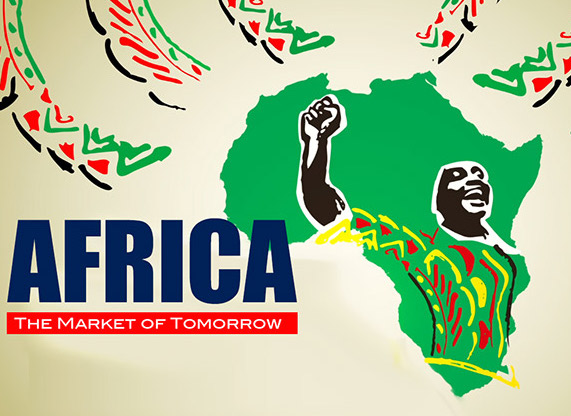


Africa’s rapid economic growth is creating substantial new business opportunities that are often overlooked by global companies. The African market today in undoubtedly one of the most lucrative and profitable business destination. Analysts project that industries, agriculture, resources, and infrastructure – together could generate as much as $2.8 trillion in revenue for African countries annually by the year 2025 – or $1 trillion more than what it generates today. Africa’s collective GDP, at over $1.5 trillion in 2020, is now roughly equal to the large economies of Brazil or Russia. While Africa’s increased economic momentum is widely recognised, less known are its sources and likely staying power.
Natural resources directly accounted for just 24 per cent of the continent’s GDP growth from 2010 through 2020. Experts believe that the key to Africa’s growth surge were improved political and macroeconomic stability and microeconomic reforms.
It is forecast that future economic growth in Africa will be supported by the continent’s increasing ties to the global economy. Rising demand for commodities is driving buyers around the world to pay dearly for Africa’s natural riches and to forge new types of partnerships with African producers. And Africa is gaining greater access to international capital; total foreign capital flows into Africa rose from $15 billion in 2000 to a peak of over $120 billion in 2019.
Today the rate of return on foreign investment in Africa is higher than in any other developing region.Early entry into African economies provides opportunities to create markets, establish brands, shape industry structure, influence customer preferences, and establish long-term relationships. Business can help build the Africa of the future.
The rise of the African urban consumer also will fuel long-term growth. Today, 40 per cent of Africans live in urban areas, a portion close to China’s and continuing to expand. The number of households with discretionary income is projected to rise by 50 per cent over the next 10 years, reaching 128 million. By 2030, the continents’ top 18 cities could have a combined spending power of $1.3 trillion.
In recent times, there has been a scramble for the resources and markets of Africa. China, India and Brazil, among others, are competing with African countries’ traditional trading partners, from Europe and America, to win access to the continent’s commodities. China and India in particular are funding and building economic and social infrastructure projects across the continent.
BRICs countries – Brazil, Russia, India and China – are expected to play a significant role in the future growth of Africa.
The global recession and its recovery have been nourishing these so-called South-South
ties and recent reports that:
• By 2025, BRIC-Africa trade will have increased threefold, to over $750 billion from
$155 billion in 2010.
• BRICs share of Africa’s total trade will increase from one-fifth today to one-third in
the next five years.
• BRICS foreign direct investment stock in Africa will swell to more than $150 billion
from around $80 billion today.
Notably, a host of companies from the BRIC are now playing a larger role in the international arena. In 2019 alone, 231 (or 11.5 per cent of the total) companies listed in the Forbes Global 2000 originated in the BRICs – up from only 83 companies (four per cent) in 2015. Undoubtedly, the writing is on the wall – BRIC-Africa partnership is going to shape the future of global economy in years to come.
Companies and businesses from BRIC operating in Africa are outpacing American and European rivals through lower prices, faster action, and a greater willingness to work in difficult environments.
However, there’s a great deal of negative publicity surrounding many African countries, and that tends to be all that people hear about. But in reality there are 54 countries on the continent and in many of them, there are an enormous amount of positive things happening. There are extraordinarily promising possibilities in agribusiness, infrastructure, and tourism.
The best possibilities are in the southern half of the continent, countries like Mozambique, South Africa, Mauritius, and Namibia. Ghana has enormous potential in its ports, fisheries, and tourism, as does Botswana.
As more and more opportunities present themselves, Africa is sure to emerge as one of the most profitable places to do business with – those who do not take notice of Africa’s tremendous potential in the coming years surely risk getting left behind in the race.