
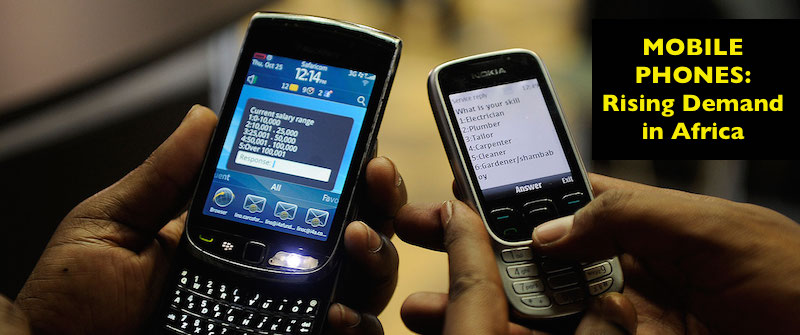
When it comes to digital connectivity, Africa has undergone an unprecedented mobile revolution. As of 2026, the continent has thoroughly cemented its status as a "mobile-first" region. According to recent GSMA Intelligence reports, Africa's mobile subscriber base has shattered early forecasts, surpassing 600 million unique subscribers. In a historic leapfrog over legacy infrastructure, more Africans have connected to high-speed mobile networks in the last decade than the entire global fixed-line rollout of the previous century.
The actual growth has baffled international analysts and investors alike. Because vast swaths of Africa previously lacked fixed-line infrastructure—with landlines historically reaching less than 3 percent of the population—mobile networks became the ultimate economic lifeline.
In the sparsely populated and extensive African continent, the massive costs of stringing up copper telephone wires were simply never economically viable. Mobile networks, on the other hand, are highly scalable. Today, cell towers rise above mega-cities like Cape Town and Cairo, as well as remote rural villages, defying challenges like rugged terrain, vast distances, and inconsistent power grids.

Sub-Saharan Africa: Unique Mobile Subscribers
Regional Giants: Nigeria and South Africa
The mobile handset market in Nigeria has firmly established itself as an unprecedented economic powerhouse on the continent. With active mobile connections exceeding 220 million in 2026, Nigeria has officially solidified its position as the largest telecom market in Africa, displacing South Africa from the number one spot in terms of sheer volume. With smartphone adoption continuing to surge, Nigeria represents the ultimate growth frontier for global handset manufacturers.
South Africa remains a highly lucrative, advanced market, boasting over 115 million connected devices driven by multiple-SIM ownership and mature digital economies. However, the sheer population density of Nigeria, followed closely by rapidly expanding tech hubs in Egypt, Kenya, and Morocco, dominates the African mobile landscape today.
It is in the rapidly developing nations that the modern statistics are most startling. The Democratic Republic of Congo, with a population exceeding 100 million, has leapfrogged legacy landlines entirely. While fixed telephones remain practically non-existent, the country now boasts nearly 50 million mobile phone subscribers. Infrastructural challenges, such as a lack of reliable electricity, have not proved to be a hindrance; enterprising roadside vendors have built thriving micro-businesses charging mobile phones using solar panels and deep-cycle car batteries.
Top Mobile Markets in Africa
Explore the continent's most connected nations. Click on a country's marker or the sidebar leaderboard to view the latest subscriber and penetration data.
5G Expansion and Direct-to-Cell Satellites
The African telecom sector in 2026 is defined by rapid technological maturation and the narrowing of the digital divide. We are currently witnessing the aggressive expansion of 5G networks beyond traditional economic hubs into secondary cities, spearheaded by major operators in South Africa, Nigeria, and Kenya. Accompanying this network upgrade is a surge in localized, ultra-affordable 4G/5G "smart-feature phones." These hybrid devices offer touchscreens and app ecosystems at a fraction of the cost of traditional smartphones, driving unprecedented internet adoption among lower-income demographics.
Furthermore, the continent is actively solving its notorious rural coverage gaps through groundbreaking Satellite-to-Mobile (Direct-to-Cell) partnerships. Low Earth Orbit (LEO) satellite providers have begun partnering directly with African telecom giants to beam broadband coverage straight to unmodified consumer smartphones. This revolutionary development completely eliminates the need for expensive terrestrial cell towers in isolated terrains, finally bringing reliable, high-speed internet to the most remote agricultural and mining communities across the continent.
The Rise of Local Assembly
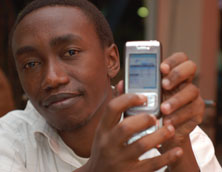
Looking at the great demand for mobile phones and the rising sales figures throughout the African continent, enterprising organizations have recognized the value of localized manufacturing. Pioneers like Zambia-based M-Tech Mobile Communication led early efforts in assembling regional handsets. Today, this trend has exploded, with massive assembly plants opening in Kenya, Rwanda, and Egypt to bypass heavy import tariffs and produce localized smart devices.
"We believe in bringing technology closer to the African people by providing world-class products at competitive prices," notes a leading regional distributor. "The business potential of local assembly is enormous, as we will be meeting the rising demand for mobile handsets throughout Africa while creating thousands of local jobs and reducing our reliance on purely imported hardware."
Did You Know?