
Africa is fast emerging as one of the premier future markets for sourcing quality leather and hides for the booming global leather industry. Leather and leather products are among the most widely traded and universally used commodities in the world. Already, the total value of annual trade is estimated at 1.5 times the value of the meat trade; more than five times that of coffee, and more than eight times that of rice.
Formal international trade in leather and leather goods is estimated at over US$ 80 billion a year and the market is far from saturated. In the next decade, the demand for leather raw materials (hides) and finished products is projected to consistently exceed supply—making the African leather industry one of the most lucrative business sectors in the years to come.
Africa’s massive abundance of livestock represents a natural, structural strength for the sector, as leather is a direct by-product of the meat industry. Africa hosts over 20 per cent of the world’s cattle population, a demographic that grew by about a quarter over the last decade, far outpacing the global trend. Similarly, Africa possesses about 25 to 30 per cent of the world’s sheep and goat population. This naturally puts the continent at the centre of the booming industry as a key supplier of raw materials to global markets.
 However, despite its immense significance as a livestock producer, Africa historically accounted for only eight per cent of world production of cattle hides and about 14 per cent of goat and sheepskins. Further, even though African countries often rank leather high in importance as an export commodity, finished leather products generally accounted for less than four per cent of total continental exports. This was largely due to the fact that the industry in most African countries remained an unorganised sector focused on exporting raw, unprocessed hides (wet blue).
Fortunately, this paradigm is changing rapidly. As global supply chains tighten, more countries around the world are looking to source their long-term requirements for semi-finished and finished leather directly from African processing hubs.
India's Strategic Pivot to East Africa
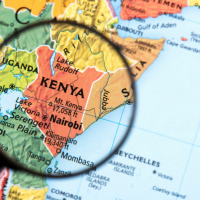
India, for instance, has aggressively shifted its strategy to import processed leather from East Africa. Faced with domestic supply constraints and the threat of declining leather exports, the Indian Council for Leather Exports (CLE) continuously dispatches teams of Indian exporters to Ethiopia and Kenya to finalize joint ventures with local tanneries.
The Indian leather industry’s ambitious export target of over $10 billion by 2030 can only be achieved by securing long-term raw material and semi-finished supply chains from Africa. India produces approximately two billion square feet of leather domestically, but its booming export sector requires billions more square feet per annum of superior quality hides.
Indian exporters have firmly identified Africa's huge livestock population as the ultimate solution. Ethiopia and Kenya remain the largest producers of raw leather in the region. Foreign investors are actively executing joint ventures with African companies, providing vital technical assistance, modern processing machinery, and capital. These JVs convert raw hides into semi-finished and crust leather for direct shipment to India, bypassing traditional middlemen.
Value of Processed & Finished Leather Exports from Africa
(USD Billions)

© Africa Business Pages
Source: African Leather and Leather Products Institute (ALLPI) Projections, 2026
Livestock Exports to the Middle East
 Countries in the Horn of Africa are among the largest exporters of livestock globally, especially to the Middle East. For nations like Ethiopia and Somalia, livestock and livestock products are primary foreign exchange earners.
The Middle Eastern countries have been a traditional destination for the Horn of Africa. These nations export millions of sheep and goats, alongside hundreds of thousands of cattle and camels per year to the Arabian peninsula. In the past—such as the early 2000s—importing nations occasionally banned live animals from the region due to isolated outbreaks of Rift Valley fever. However, modern traceability systems, rigorous quarantine protocols, and dramatically improved sanitary and phytosanitary (SPS) standards have since reopened and vastly expanded these vital trade corridors.
Other major exporters of live animals include Somalia, Kenya, Sudan, and Djibouti. Together, these countries export a massive share of the requirements for the global livestock and leather industry, cementing their status as indispensable players in the global supply chain.
Value-Addition By Africa's Leather Industry
Entering 2026, the African leather industry is undergoing a structural renaissance driven by the African Continental Free Trade Area (AfCFTA) and aggressive government policies aimed at "value addition." To stop the massive loss of potential revenue, several East and West African nations have imposed strict export taxes or outright bans on the export of raw hides. Instead, foreign direct investment is being funneled into state-of-the-art, eco-friendly leather industrial parks, such as Ethiopia’s Modjo Leather City and Kenya's Ngozi Leather Park. These hubs transform raw hides into finished leather, footwear, and luxury goods before export, multiplying the economic yield by up to 400%.
Simultaneously, the industry is rapidly adapting to the stringent Environmental, Social, and Governance (ESG) standards required by European and North American fashion brands. African tanneries are increasingly adopting chrome-free, sustainable tanning processes and utilizing blockchain technology to ensure complete traceability from the farm to the finished product. This modernization is actively attracting premium global brands to source finished leather directly from Africa, permanently shifting the continent from a raw material supplier to a high-value manufacturing destination.
Did you know?