
Tunisia
folder_open North Africa
Tunisia features a predominantly Muslim population and lists Arabic as its official national language. In recent years, the country has navigated complex macroeconomic transitions to solidify its standing as a critical manufacturing and trade bridge between Africa and Europe. While traditional economic metrics have fluctuated during periods of global volatility, Tunisia's relentless drive to position itself as a first-world technology and logistics hub continues to gain impressive momentum. Like other stars in Africa's economic firmament, Tunisia is reaping the long-term rewards of its heavy historical investment in human capital. The nation leverages the advanced skills of its people to manufacture and engineer products for which there is high international demand. Unlike distant offshore markets, Tunisia is situated right on the doorstep of its principal market—the European Union—to which it sends roughly 70 to 80 per cent of its exports. It is this immediate geographical proximity, combined with a highly educated workforce, that forms the foundational key to Tunisia's economic resilience. Latest Economic Developments As of 2026, Tunisia is rapidly emerging as a central pillar in Europe's green energy transition. One of the most monumental infrastructure developments in the nation's history is the "Elmed" interconnector project—a 200-kilometer undersea high-voltage electricity cable directly linking Tunisia to Italy. This multi-million-euro mega-project allows Tunisia to harness its massive, untapped solar and wind potential in the Sahara and export clean, renewable electricity directly into the European grid. This initiative not only secures foreign exchange revenues but firmly establishes Tunisia as a strategic green energy corridor for the Mediterranean. Simultaneously, Tunisia is experiencing a profound technological renaissance. The government's progressive "Startup Act" has transformed Tunis into one of the most vibrant tech ecosystems on the African continent. Favorable regulatory frameworks, tax exemptions, and state-backed venture capital initiatives have attracted a surge of international tech firms looking for nearshoring opportunities. With European companies eager to shorten their supply chains post-pandemic, Tunisia’s abundance of multilingual engineers and software developers has made it the premier destination for IT outsourcing, aerospace component manufacturing, and automotive electronics assembly. Tunisia's Top 7 Commodity Imports Data Source: National Institute of Statistics (INS) | © Africa Business Pages Connecting Africa to Global Supply Chains The roots of Tunisia's modern industrial achievements lie in accurately forecasting international trends. Decades ago, the country realized the implications of globalization, understanding that the entire production process would eventually be internationalized. By integrating into the European Free Trade Area frameworks, Tunisia ensured its manufactured goods could compete globally purely on quality and price. If they could position themselves as low-cost, high-quality producers, they had the chance to rub shoulders with the big boys in the industrial world. Their geographic position, at the hub of the European, Arab, and African worlds, remains their greatest logistical advantage. To gear up the country, Tunisia initiated a quiet but meticulous revolution: the empowerment of women in the workforce, the creation of modern infrastructure, and the continuous retraining of its labor pool. Today, Tunisia's investment in education remains one of the highest in the developing world. The universities produce thousands of engineers and IT specialists every single year. The combination of these factors has produced one of the most skilled and best-qualified workforces in Africa—and the southern Mediterranean. More significantly in terms of international competitiveness, the cost of skilled labor remains lower than in countries which are Tunisia's main nearshoring rivals in Eastern Europe. This exceptional value proposition explains why virtually every household brand name, from Airbus to major European automotive manufacturers, maintains a critical production or assembly presence in Tunisia today. Did You Know? The Startup Act: Tunisia was the first country in Africa to pass a comprehensive "Startup Act," providing state-funded salaries, tax breaks, and fast-tracked visas to encourage tech entrepreneurship. Olive Oil Giants: Despite its small size, Tunisia is consistently ranked among the top three largest exporters of olive oil in the entire world, frequently rivaling Spain and Italy. Aerospace Hub: Tunisia has a booming aerospace manufacturing sector. The country supplies critical electrical wiring, cabin components, and software systems directly to Airbus for its commercial jetliners. Ancient Carthage: Modern-day Tunis is built right next to the ruins of Carthage, the ancient superpower that once dominated the Mediterranean and famously battled the Roman Empire. A Green Energy Corridor: The Elmed undersea cable project will soon allow Tunisia to transmit 600 MW of clean, desert-generated solar and wind power directly into the European electricity grid.
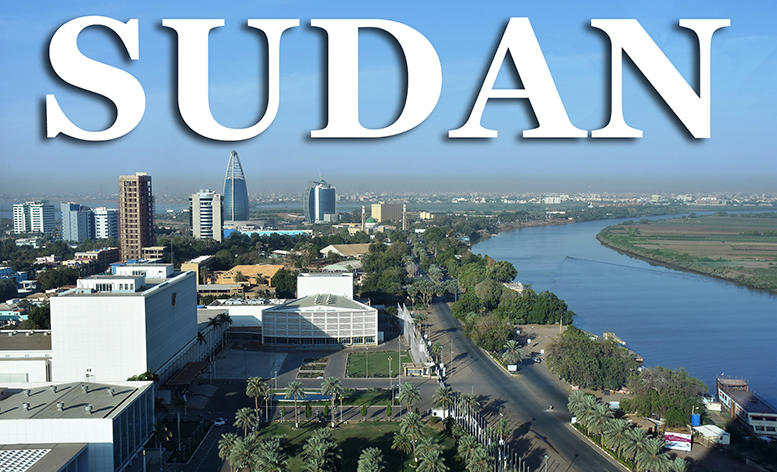
Wedged between the White and Blue Niles, the Al-Mogran development in Khartoum was once envisioned as a huge, shimmering complex of glass and steel. For years, the Sudanese capital sought to leap into modernity with this $4-billion Gulf-funded commercial and residential megaproject. Designed and planned by consultants in the United Arab Emirates and Malaysia, Al-Mogran bore many of the hallmarks of the lavish projects raising billions for developers in the Arabian Gulf. The Sudanese government had sought since the early 1990s to develop this horn of land jutting into one of the widest parts of the Nile. By 2005, the project officially got off the drawing board when the private Sudanese conglomerate DAL joined with authorities to create Alsunut Development. The Dubai Islamic Bank emerged as the largest foreign investor, funneling millions into construction to raise a symbol of Khartoum's post-war renaissance and a beacon of modernity in the region. The gleaming 396-hectare (160-acre) business complex was originally designed to house 58,000 employees. The adjacent residential zone was slated to include about 1,000 villas, 6,700 apartments, international schools, hotels, hospitals, and an 18-hole golf course. Sudan Real GDP Growth - Overview Data Source: IMF & World Bank Projections | © Africa Business Pages The Current Reality: A Shift in the Economic Epicenter Although Al-Mogran was designed to give Khartoum a new face, the devastating conflict that erupted across Sudan in 2023 abruptly halted these dreams. The ensuing crisis fundamentally altered the trajectory of the country, causing severe damage to the capital and forcing businesses, diplomatic missions, and administrative bodies to relocate to safer regions. The once-gleaming construction sites in Khartoum now stand largely paused, serving as stark reminders of the nation's fragile stability and the high risks inherent in frontier market investing. In 2025 and 2026, Sudan's economic epicenter definitively shifted away from Khartoum to the Red Sea coast. Port Sudan has rapidly emerged as the country’s de facto administrative and commercial capital, absorbing displaced businesses, international humanitarian agencies, and critical logistics operations. With the former capital severely compromised, the government and foreign investors are now prioritizing the expansion of Port Sudan's maritime, telecommunications, and housing infrastructure to stabilize the nation's vital import-export lifelines. Despite the immense macroeconomic challenges—including a severe multi-year GDP contraction and soaring inflation—the country's agricultural and mining sectors remain highly resilient lifelines. Sudan continues to be one of Africa's premier producers of gold, which accounts for the vast majority of its current export revenues and foreign exchange reserves. As international mediation efforts slowly pave the way for post-conflict stabilization, future FDI is expected to pivot heavily toward essential reconstruction, food security, and renewable energy, laying the groundwork for a grueling but absolutely necessary economic recovery. Top 7 Import Commodities in Sudan Data Source: TrendEconomy / World Bank | © Africa Business Pages Import Dynamics and Trading Partners Historically, the average annual income in Sudan barely exceeded $500, and promoters of luxury developments like Al-Mogran admitted that such projects risked widening the gap between wealthy future residents and the impoverished populations living on the fringes. Today, survival and basic commodity imports dictate the national economy. Sudan relies heavily on imports to sustain its population and remaining industrial base. Countries like China, the United Arab Emirates, India, and Egypt remain Sudan's primary import partners. The nation's inbound supply chain is dominated by essential foodstuffs (particularly wheat and cereals to ensure food security), refined petroleum to power generators and vehicles, and life-saving pharmaceuticals. Did You Know? The Gum Arabic Giant: Sudan is the undisputed global leader in the production of gum arabic, accounting for roughly 80% of the world's supply. This critical binder is used worldwide in soft drinks, cosmetics, and pharmaceuticals. The Gold Lifeline: Sudan is the third-largest producer of gold on the African continent. Today, raw gold exports account for approximately 70% of the nation's total foreign exchange earnings. More Pyramids Than Egypt: The ancient region of Nubia in northern Sudan is home to over 200 ancient pyramids, more than double the number found in neighboring Egypt. The Meeting of the Niles: The historical capital city, Khartoum, is geographically famous as the exact location where the White Nile and the Blue Nile converge to form the mighty main Nile River. The Rise of Port Sudan: Due to the devastating 2023 conflict that severely damaged Khartoum, the coastal city of Port Sudan on the Red Sea has become the de facto operational and economic capital of the country. Related Videos
South Sudan: An Emerging Market
folder_open North Africa
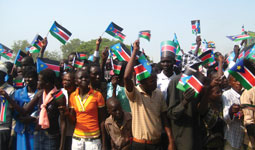
Smart investors, savvy analysts and individuals familiar with emerging markets know that South Sudan has the potential to become Africa’s next best bet. So says David Raad and Associates (DR&A) who helps businesses explore and undertake opportunities in southern Sudan. With few industries outside the oil sector and almost non-existent infrastructure, many international and regional investors are eyeing business opportunities in a newly independent South Sudan. Cement manufacturers are hoping for an increase in demand from the south as the region develops its infrastructure. Pradeep Paunrana, managing director of Kenya’s Athi River Mining, producer of the Rhino cement brand, says that South Sudan will see considerable economic development over the coming years and that cement will be central to improving infrastructure. East Africa Portland Cement managing director Kephar Tande said his company is also very interested in the southern Sudan market but that any investment is dependent on the outcome of recently announced economic reforms. Recent reports suggest that Kenya Commercial Bank (KCB) expects to expand its branch network in South Sudan in the coming years. Major foreign investments in South Sudan remain strategically concentrated within the oil, infrastructure, and services sectors. The investment landscape is currently dominated by significant capital inflows from China and South Africa, alongside key regional East African partners. Notable projects driving economic growth include large-scale oil exploration initiatives, a landmark $1 billion commitment from South Africa for refinery construction, and ongoing infrastructure development projects across the nation. Rich in natural resources, South Sudan boasts some of the most fertile agricultural land in Africa, with vast arable lands suitable for crop farming and livestock. It is also home to untapped mineral deposits, a large network of rivers, and a diverse ecosystem that supports tourism and renewable energy projects. The government of South Sudan, in collaboration with international partners, has worked to establish policies that encourage foreign investment and sustainable economic growth. With its rich natural resources, strategic location, and commitment to economic reform, South Sudan is positioning itself as a hub for investment in East and Central Africa. The government’s pro-investment policies, combined with the country’s youthful workforce and untapped markets, ensure long-term profitability for businesses. Kenya’s East African Breweries Ltd (EABL) has also established a brewery in southern Sudan. This subsidiary is part of EABL's broader regional footprint, which focuses on production and distribution across East Africa, including beer and spirits sales in South Sudan. Many business people are, however, adopting a wait-and-see approach. Uganda’s Daily Monitor reports that many Ugandan traders will not return to South Sudan until they can be assured of their safety. According to the newspaper, Ugandan traders in South Sudan have reported cases of harassment and human rights abuse by security officers and influential people in the region. Adel Ali, chief executive of United Arab Emirates-based Air Arabia believes that southern Sudan needs significant infrastructure development before the region’s aviation industry can really be developed. Air Arabia has been operating flights to Khartoum since 2004 but has no immediate plans to service South Sudan. Ali added that although southern Sudan’s aviation sector holds possible potential for investment, more clarity is needed on the government’s investment plans. South Sudan: Economic Outlook The economy of South Sudan is one of the most oil dependent economies in the world, despite being endowed with bountiful natural resources. It has a very fertile agricultural land and vast number of livestock. South Sudan has an estimated total of over 36 million head of cattle, sheep, and goats, with livestock populations exceeding the human population. Political instability, poor governance, and corruption continue to hinder development in the world's youngest country. South Sudan exports timber to the international market. Some of the states with the best known teak and natural trees for timber are Western Equatoria and Central Equatoria. There are teak plantations located at Kegulu; the other, oldest planted forest reserves are Kawale, Lijo, Loka West, and Nuni. Western Equatoria timber resources include mvuba trees at Zamoi. Business Opportunities in South Sudan Since its independence on July 9, 2011, South Sudan’s economy has been growing at a steady pace. As of April 2026, South Sudan's nominal GDP is projected at $6.07 billion, with a real GDP growth rate of 4.1%. The economy, largely dependent on oil, is plagued by high inflation (14.0%) and instability, with a GDP per capita of approximately $488. However, due to instability in the oil prices in the global market, and concurrent shocks to GDP growth in 2026 is projected to contract. The COVID-19 pandemic and climatic conditions had also contributed in exacerbating poverty, access to services and general living standards for many South Sudanese. Prior to independence, South Sudan produced 85% of Sudanese oil output. The oil revenues according to the Comprehensive Peace Agreement (CPA), were to be split equally for the duration of the agreement period. Since South Sudan relies on pipelines, refineries, and port facilities in Red Sea state in North Sudan, the agreement stated that the government in Khartoum would receive 50% share of all oil revenues. Oil revenues constitute more than 90% of the government of South Sudan's budget according to the southern government's Ministry of Finance and Economic Planning and this has steadily grown since the signing of the peace agreement. However, the signing of the most an important truce in 2018, and subsequent formation of the Revitalized Transitional Government of National Unity (R-TGoNU) in 2020, had provided hope for recovery and peace building. Nonetheless, South Sudan still faces the risk of reversing these gains, with increased incidents of concurrent shocks and the intensity in subnational violence that threatens stability. “Looking ahead, we expect the South Sudanese economy to recover provided that the authorities adhere to agreed upon reform priorities,” said Joseph Mawejje, World Bank Economist. “Developments in the oil sector will continue to play a critical role, but favorable climatic conditions and peace and security are also essential elements. Recent advances in the development of a COVID-19 vaccine have raised hopes that the global economy could recover faster, which should support a sustained uptick in oil prices, more foreign direct investment, and remittances for South Sudan.” South Sudan: Oil Industry South Sudan’s oil industry is steadily recovering as a power-sharing government that ended five years of civil war remains in place, with production increasing to more than 170,000 barrels a day. That’s still significantly down from levels before civil war broke out in 2013. In recent years, a significant amount of foreign-based oil drilling has begun in South Sudan, raising the land's geopolitical profile. Oil and other mineral resources can be found throughout South Sudan, but the area around Bentiu is commonly known as being especially rich in oil, while Jonglei, Warrap, and Lakes have potential reserves. During the autonomy years from 2005 to 2011, Khartoum partitioned much of Sudan into blocks, with about 85% of the oil coming from the South. Blocks 1, 2, and 4 are controlled by the largest overseas consortium, the Greater Nile Petroleum Operating Company (GNPOC). GNPOC is composed of the following players: China National Petroleum Corporation (CNPC, People's Republic of China), with a 40% stake; Petronas (Malaysia), with 30%; Oil and Natural Gas Corporation (India), with 25%; and Sudapet of the central Sudan government with 5%. The other producing blocks in the South are blocks 3 and 7 in eastern Upper Nile state. These blocks are controlled by Petrodar which is 41% owned by CNPC, 40% by Petronas, 8% by Sudapet, 6% by Sinopec Corp and 5% by Al Thani. The World Bank supports South Sudan primarily through grants and zero-interest financing from the International Development Association (IDA) rather than traditional loans, focusing on economic stability, energy, and health. Recent support includes an $18 million facility to strengthen the banking sector and financial policy through 2028. Did You Know? The World's Youngest Nation: South Sudan officially gained its independence from Sudan on July 9, 2011, making it the newest recognized country on the globe. Livestock Outnumbers People: The country holds an astounding wealth of livestock. With an estimated 36 million cattle, sheep, and goats, the animal population far exceeds the human population. Untapped Solid Minerals: While famous for oil, South Sudan sits on vast, unexploited deposits of valuable minerals including gold, copper, iron ore, zinc, and tungsten. The Sudd Wetland: It is home to the Sudd, one of the largest tropical wetlands in the world, which spans up to 130,000 square kilometers during the wet season and sustains incredible biodiversity. Oil-Driven Economy: Prior to independence, South Sudan produced roughly 85% of the entire region's oil. Today, oil revenues still constitute over 90% of the national budget.
Mandarin Gaining Popularity in Africa
folder_open North Africa
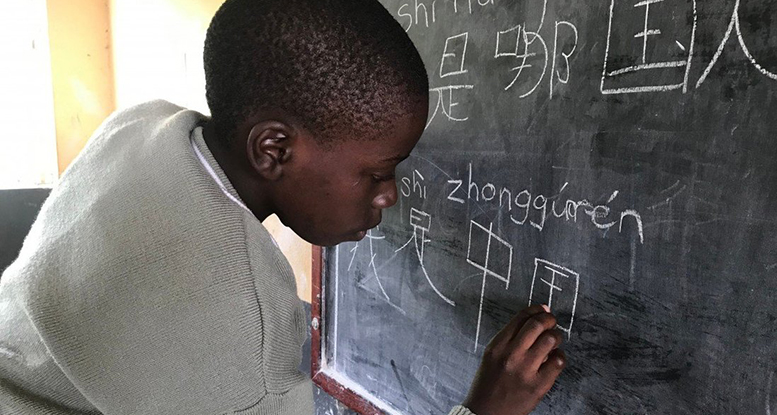
Contemporary Africa-China relations have a long history and began around the 1950s, when China signed the first official bilateral trade agreements with Algeria, Egypt, Guinea, Somalia, Morocco, and Sudan. As of the 21st century, the number of Chinese citizens in Africa is estimated to be over 1,000,000, while the African diaspora in China remains a vibrant community of around 200,000. Economic ties between Africa and the People’s Republic of China grow increasingly strong, solidifying China's position as Africa’s largest trading partner. In the 1990s, the trade between both parties increased by 700 per cent. The Forum on China-Africa Cooperation (FOCAC) was established in 2000 as an official platform to strengthen this multifaceted relationship. On the other hand, the relationship China enjoys with Africa has been scrutinized by Western countries, who frequently cite concerns regarding business practices, governance, and human rights. However, outside of pure commerce, China has consistently shown tangible support to Africa in matters of foreign aid, healthcare development, and massive infrastructure projects. Culturally, Africa now hosts dozens of Chinese centers and Confucius Institutes built to promote the Chinese language and culture. Mandarin – the Chinese language – is the most widely spoken language in the world and ranks as the second most popular business language after English. China’s economy is the second largest in the world. Its rapid growth and emergence as a global powerhouse underscore the critical significance of understanding Chinese business developments. Demand for China’s consumer goods grows with each decade, fueled by its population of over 1.4 billion and the explosive global activity of China’s major enterprises. China is also among the world's largest foreign investors and maintains the highest number of trading partnerships across almost 130 countries. Business analysts around the world claim that those who do not speak Mandarin are at a severe disadvantage in the 21st century. The study of the Chinese language opens lucrative pathways into Chinese politics, economics, history, and exclusive B2B networking opportunities. The Rise of Mandarin in African Education To support this expanding economic alliance, the integration of Mandarin within African educational frameworks has accelerated remarkably. As highlighted during the 2024 Joint Conference of Confucius Institutes in Africa held in Nairobi, there are now dozens of operational institutes and classrooms across the continent. This commitment to cultural exchange was further solidified with the recent formation of the East African Confucius Institutes Alliance, which brings together representatives from multiple countries to streamline language education and localize teaching resources. Beyond institutional hubs, Mandarin is increasingly recognized as a vital geopolitical and business asset, moving from a niche subject to a core curriculum requirement. Recognizing the practical benefits of this linguistic alignment, nations like Kenya have officially incorporated Chinese into their national education systems. This strategic educational shift ensures that the next generation of African professionals is equipped to engage directly with Chinese investors, navigate bilateral trade agreements, and capitalize on the growing number of people-to-people exchanges. A New Era of Trade Relations Diplomatic relations between China and Africa have shown a high level of improvement since the 1970s following the Cold War. China expressed its solidarity with the Pan-Africanist Congress, while also supporting African countries in their quests for independence. In 1971, African nations were instrumental in securing China’s seat in the United Nations. Since 1996, China has practiced a policy of ‘non-interference’ in the domestic affairs of African countries, leading to frequent state visits and continuous dialogue in Beijing. By the end of 2025, the trade volume between China and Africa hit a record high, reaching US$ 348 billion, demonstrating a 17.7% year-on-year growth despite prevailing global economic headwinds. China’s total direct investment in Africa continues to expand deeply, while its commercial loans to Africa have driven over 1,500 major cooperation projects all over the continent. This infrastructure assistance has totaled hundreds of billions of RMB Yuan over the past several decades, cementing China as an indispensable economic ally. Did You Know? Trade volume between China and Africa reached a historic $348 billion by the end of 2025, driven by a 17.7% year-on-year surge. To correct trade imbalances, China has allocated over $2.5 billion specifically to support the export of African products into the Chinese market. China recently implemented a zero-tariff policy applied to exports from all African countries that maintain diplomatic relations with Beijing. The very first Confucius Institute in Africa was established at the University of Nairobi back in 2004. Recognizing future business demands, Kenya's Ministry of Education has formally incorporated the Chinese language into its national education system. In 2024, the number of Chinese workers directly deployed on projects in Africa rebounded to over 90,000, with top host nations being Guinea, the DRC, and Egypt.
Preliminary request for participation in the trade show
place
calendar_today
Preliminary request for visitor registration
Visitor Registration
place
calendar_today