
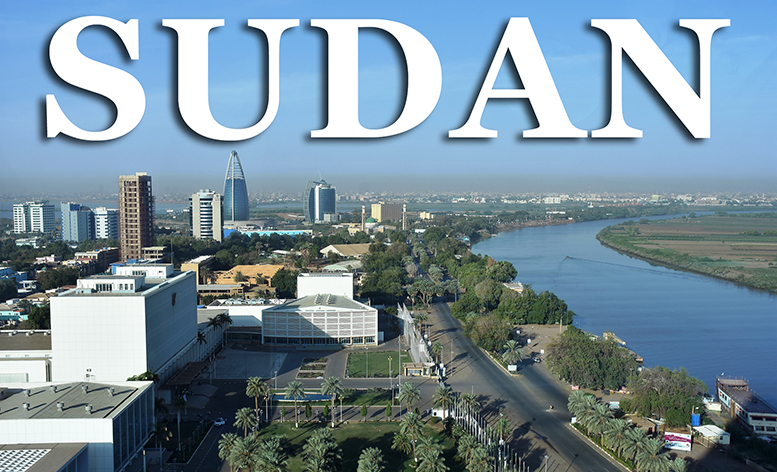
Wedged between the White and Blue Niles, the Al-Mogran development in Khartoum was once envisioned as a huge, shimmering complex of glass and steel. For years, the Sudanese capital sought to leap into modernity with this $4-billion Gulf-funded commercial and residential megaproject. Designed and planned by consultants in the United Arab Emirates and Malaysia, Al-Mogran bore many of the hallmarks of the lavish projects raising billions for developers in the Arabian Gulf.
The Sudanese government had sought since the early 1990s to develop this horn of land jutting into one of the widest parts of the Nile. By 2005, the project officially got off the drawing board when the private Sudanese conglomerate DAL joined with authorities to create Alsunut Development. The Dubai Islamic Bank emerged as the largest foreign investor, funneling millions into construction to raise a symbol of Khartoum's post-war renaissance and a beacon of modernity in the region.
The gleaming 396-hectare (160-acre) business complex was originally designed to house 58,000 employees. The adjacent residential zone was slated to include about 1,000 villas, 6,700 apartments, international schools, hotels, hospitals, and an 18-hole golf course.

Sudan Real GDP Growth - Overview
The Current Reality: A Shift in the Economic Epicenter
Although Al-Mogran was designed to give Khartoum a new face, the devastating conflict that erupted across Sudan in 2023 abruptly halted these dreams. The ensuing crisis fundamentally altered the trajectory of the country, causing severe damage to the capital and forcing businesses, diplomatic missions, and administrative bodies to relocate to safer regions. The once-gleaming construction sites in Khartoum now stand largely paused, serving as stark reminders of the nation's fragile stability and the high risks inherent in frontier market investing.
In 2025 and 2026, Sudan's economic epicenter definitively shifted away from Khartoum to the Red Sea coast. Port Sudan has rapidly emerged as the country’s de facto administrative and commercial capital, absorbing displaced businesses, international humanitarian agencies, and critical logistics operations. With the former capital severely compromised, the government and foreign investors are now prioritizing the expansion of Port Sudan's maritime, telecommunications, and housing infrastructure to stabilize the nation's vital import-export lifelines.
Despite the immense macroeconomic challenges—including a severe multi-year GDP contraction and soaring inflation—the country's agricultural and mining sectors remain highly resilient lifelines. Sudan continues to be one of Africa's premier producers of gold, which accounts for the vast majority of its current export revenues and foreign exchange reserves. As international mediation efforts slowly pave the way for post-conflict stabilization, future FDI is expected to pivot heavily toward essential reconstruction, food security, and renewable energy, laying the groundwork for a grueling but absolutely necessary economic recovery.
Top 7 Import Commodities in Sudan
Import Dynamics and Trading Partners
Historically, the average annual income in Sudan barely exceeded $500, and promoters of luxury developments like Al-Mogran admitted that such projects risked widening the gap between wealthy future residents and the impoverished populations living on the fringes. Today, survival and basic commodity imports dictate the national economy.
Sudan relies heavily on imports to sustain its population and remaining industrial base. Countries like China, the United Arab Emirates, India, and Egypt remain Sudan's primary import partners. The nation's inbound supply chain is dominated by essential foodstuffs (particularly wheat and cereals to ensure food security), refined petroleum to power generators and vehicles, and life-saving pharmaceuticals.
Did You Know?