
Djibouti: The Rising Star of East Africa
folder_open East Africa
Djibouti has had tremendous investment promotion success over the last five years and is now one of the leading FDI areas in Africa. Its government has decided to use its Red Sea position and proximity to Ethiopia to the West and the Arabian Gulf to the East, as the driving theme for major investment promotion. But it also recognised that location alone is not enough, so over the past five years it established a Djibouti Free Zone (DFZ), and a new, more modern, foreign investment regime that would support new direct investment into that Zone. Undoubtedly, Djibouti has 'location, location, location' to sell and the country is now a central food aid distribution center, and it boasts a new luxury hotel. In addition, there have been significant moves to liberalise and facilitate trade with Ethiopia. There have been agreements to co-locate customs operations at the Djibouti Port. The two countries are also working towards adopting harmonized clearance and inspection documents and procedures. The DPW is building 'joint' facilities at the new port at Durlaleh so goods can transit freely into the Ethiopian market. Such innovations lower overall distribution costs, and the positive impacts will extend across the Horn of Africa. The main catalysts have been the DFZ and leading investments in it by such groups as Dubai Ports World and, more recently, by Bahrain Maritime and Mercantile International (BMMI), and parallel investments such as the Kempenski Hotel. Djibouti has set the stage for exponential growth. By partnering with groups such as Dubai Ports World and BMMI, the country's leadership has proven itself savvy at investment promotion. By creating the Djibouti Free Zone and engineering a less burdensome regulatory environment, it shows openness to trade and foreign investment. And by taking a prominent role in leading its neighbors to peace-especially Somalia, but also Ethiopia- it has demonstrated a commitment to regional stability. Simply put, no other country in the Horn of Africa has moved so decisively in the direction of economic and political reform.

Addis Ababa: The 'Dubai' of Africa
folder_open East Africa
Addis Ababa loosely translated means a ‘new flower’ and the capital city of Ethiopia is in many ways blooming like a flower. Known as the home to the African Union, formerly the Organization of African Union (OAU), Addis Ababa is the largest city in Ethiopia with a population of over 2.5 million and is often referred to as the capital of Africa because of its historical diplomatic and political significance to the African continent. Founded in 1887, this sprawling, hospitable city is situated at the foothills of the Entoto Mountains has lots to see if one is visiting for pleasure and or business – lots of souvenirs from the signature white Ethiopian dresses with intricate trimmings to fashionable outfits mostly from Italy. The city has is in the middle of a construction boom with lots of construction from skyscrapers to condors and roads. The city is growing rapidly in modernity compared to other African cities. The city is undergoing a major construction boom, where the skyline suddenly has more halfway-done high-rise buildings than ever before, and new hotels are being built at a breakneck speed. Hotels, shopping centres and office complexes rise from where small shacks once stood. Infrastructure is improving to support them. Tall, incomplete buildings are visible as far as the eye can see. In addition to the construction boom, many of its roads are being expanded and redone. The new African Union headquarters, built on the ruins of a maximum security prison, is the centerpiece of the Chinese influence. Built by the Chinese, with Chinese money, for Africa, the building spans 50,000 square metres and has more space than the AU has staff members. President after thankful president lined up at the opening of the new headquarters to thank the Chinese for the $200 million gift. And to top it off, the Chinese gave a further $100 million for the upkeep of the building. Equatorial Guinea president Teodoro Obiang Nguema noted that the generous Chinese did not even blink when the AU handed over the building specifications; they just nodded and started flying in Chinese workers to get the job done in record time. Chinese investment in Addis Ababa is bolder than anywhere else in Africa. You can’t drive for more than five minutes without seeing a massive banner in English and Mandarin celebrating the friendship between Ethiopia and China. Seeing the construction boom, diaspora Ethiopians with swollen pockets are returning with an eye on investment. No wonder some people speculate that in some years to come, Addis will be the new Dubai of Africa, with eye catching architectural buildings – what with the structural transformation of the city, the skyscrapers going up; each with unique architectural designs. And it’s not just real estate that’s booming, but there is also the construction of a light rail around the city being carried out by a Chinese railway company, the likes of those found in European countries. It is no wonder that Addis Ababa has made it to the top ten as one of the best cities to visit in Africa, published by the renowned Lonely Planet, a global travel guidebook. Mot to mention that the Ethiopian capital is number nine on the list with Puerto Iguazu of Argentina coming number 10, while San Francisco, California and Amsterdam in the Netherlands came first and second respectively.

EXPORTING GOODS TO TANZANIA
folder_open East Africa
For exporting goods to Tanzania, there are some formal governmental procedures to be taken into consideration. The following document will describe the procedures that have to be passed and it will also state what is required from you at the different stages. Unless the following guidelines are cautiously and timely followed up there will most certainly be delays in shipment of goods which will consequently result to late clearance and delivery of the goods to the final customer. The supplier can be held responsible for any additional costs incurred on shipment due non-compliance of the import procedures. Import Declaration Form (IDF) All imports to Tanzania require an IDF. When the importer in Tanzania applies for an IDF, the information to be filled out on the application is to be provided by the supplier together with a Proforma Invoice . Following information is required on the Proforma Invoice to facilitate accurate application of IDF. The information to be supplied by the exporter includes i) Specification and a clear description of the quantity and quality of the goods, ii) Free On Board (FOB) Value iii) Freight Value iv) Customs Harmonised Commodity Code v) Currency of the payment vi) Mode of Transportation, vii) Goods Country of Origin viii) The Proforma invoice number and final invoice number must read same. As per the rules of Tanzania Revenue Authority all exports into Tanzania will are subject to Destination Inspection by Tanzania Inspection Service Company (TISCAN). This is a Tanzanian registered company and a member of the COTECNA S.A GROUP. The main objectives of Destination Inspection is to verify the quality and quantity of imports and to assist Customs with the collection of the correct amounts of duties and taxes. Destination Inspection also provides Customs with an independent opinion of the Dutiable Value for Customs purposes and to verify the accuracy of tariff codes classifications. As soon as an importer has arranged to import goods and has entered into a contract with an overseas supplier, he should apply to his Commercial Bank for an Import Declaration Form (IDF). The importer must present a Proforma Invoice for the goods to be imported and will be obliged to pay a Destination Inspection Processing Fees of 1.2 per cent of the FOB value to his Commercial Bank. The Bank will then transfer the IDF and Proforma Invoice to Importer and TISCAN in Dar-es-Salaam, usually within the same working day. Importers and agents have to ensure that an IDF with all relevant Documents reach the inspection company at least 10 working days prior to arrival of the goods. Once TISCAN receives the IDF and Pro forma Invoice from the Bank, a preliminary review of the documents is carried out and the details entered into TISCAN computer system. TISCAN then electronically transmits the IDF data to affiliate in country of export for documentary data verification. Upon receipt of original documentation from suppliers, TISCAN shall prepare an Internal Findings Report (IFR) Upon receiving the IFR and there is no discrepancy in the importer’s declaration, TISCAN issues a Preliminary Classification and Valuation Report (PCVR) and Declared Classification and Valuation Report (DCVR). The PCVR / DCVR provides TISCAN’s opinions on values, classification and level of Intervention / Inspection determined by the CRMS. If importer accepts PCVR, he signs it and applies for a Single Bill of Entry (SBE). Documents to be submitted together with the application include PCVR, IDF copy, Original Shipping documents like Commercial Invoice and Ocean Bill of Lading together with original duty/taxes exemption documents (if applicable).
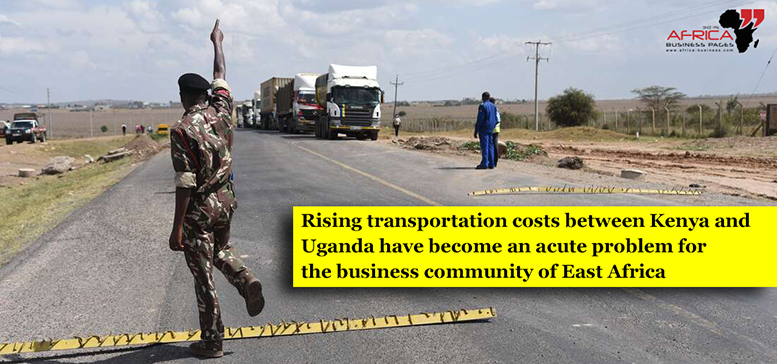
Rising transportation costs to ship goods between Kenya and Uganda have historically been an acute problem for the business community of East Africa. To combat this, Ugandan traders have aggressively pushed to empower the National Trade and Facilitation Forum (NTF) and regional shippers’ councils to fight soaring transport costs on the country’s vital Northern Corridor. The NTF aims to reduce logistics costs through the removal of non-tariff trade barriers and the harmonization of transport policies across the corridor, which also serves the Democratic Republic of Congo, Rwanda, Burundi, and South Sudan. The concerted push for reform follows years of steep transport and shipping costs along the East African route. Traders attribute these inflated costs to bureaucratic Customs systems, lengthy cargo forwarding processes, and historical infrastructure deficits. High port storage charges, expensive transit bonds, container losses at the Mombasa port, and security concerns have continually hampered East Africa's competitiveness in international trade. The cost disparity is stark: historically, while it costs between $1,400 and $1,700 to ship a 40-foot container thousands of miles from Dubai to Mombasa, the average inland transportation and clearing cost for that exact same container over the short distance between Mombasa and Kampala can skyrocket to $3,800. This massive logistical overhead forces traders to pass extra costs directly onto consumers, making the prices of regional goods less competitive globally. Almost 50 per cent of the costs incurred by most Ugandan traders go solely into handling port and transport expenses. If these logistical bottlenecks are mitigated, domestic price levels would fall significantly. Both the Uganda Revenue Authority (URA) and the Kenya Revenue Authority (KRA) have implemented measures to ease these impediments. The authorities introduced 24-hour clearing schedules at the Kenya-Uganda border posts, and massive investments in customs digitization and electronic cargo tracking have significantly reduced manual clearing times. However, traders still face strict demurrage charges and costly deposits paid to shipping lines, which are forfeited if cargo is delayed in transit. Overcoming the Meter-Gauge Legacy For decades, the corridor’s traditional meter-gauge road and rail operated far below capacity due to severe dilapidation. The legacy of the failed Rift Valley Railways (RVR) concession—which was granted in 2006 but ultimately terminated by both governments in 2017 due to chronic underperformance—left the region relying heavily on expensive road freight. Historically, importers of heavy raw materials utilized the Lake Victoria marine route, but marine logistics suffered immensely following ferry collisions in the mid-2000s that decimated the fleet. While the old meter-gauge railway took up to a month to move goods to Kampala, road freight—charging upwards of $3,500 for a single container—became the reluctant default for heavy industries like steel, plastics, and soap manufacturing. The SGR and Digital Corridors The Standard Gauge Railway (SGR) Revolution: To bypass the historical failures of the meter-gauge network, East Africa has entered a new era of mega-infrastructure. Kenya has successfully operationalized the Mombasa-Nairobi-Naivasha Standard Gauge Railway (SGR), drastically cutting the time it takes to move cargo out of the congested port. Entering 2026, Uganda is aggressively pursuing the funding and construction of its Malaba-Kampala SGR segment. Once these modern rail networks are seamlessly linked, freight that once took weeks by road will reach Kampala in under 24 hours, effectively slashing inland transit costs by more than half and revitalizing the region's industrial competitiveness. Digitization and the Single Customs Territory: Complementing physical infrastructure, East Africa has fully embraced digital trade facilitation. The implementation of the East African Community (EAC) Single Customs Territory allows Ugandan importers to clear their goods electronically while the cargo is still at the Port of Mombasa, eliminating redundant border checks. Furthermore, the operationalization of One-Stop Border Posts (OSBPs) at critical junctions like Malaba and Busia, combined with the momentum of the African Continental Free Trade Area (AfCFTA), has reduced border dwell times from several days to mere hours, injecting unprecedented efficiency into the Northern Corridor. Did You Know? The Gateway to East Africa: The Port of Mombasa is the largest and busiest port in East Africa, handling over 35 million tons of cargo annually. The Landlocked Lifeline: The Northern Corridor is the busiest transport route in East and Central Africa, serving as a critical economic lifeline for landlocked Uganda, Rwanda, Burundi, and South Sudan. High-Volume Transit: A single modern Standard Gauge Railway (SGR) freight train can pull over 200 double-stacked containers, removing more than 100 heavy transport trucks from the regional highways per trip. One-Stop Efficiency: The transition to One-Stop Border Posts (OSBPs) requires truck drivers to stop only once for customs clearance between countries, saving the regional economy millions of dollars a year in transit delays.

Business Opportunities in East Africa
folder_open East Africa
East Africa is a region overflowing with potential. From high-tech agriculture and critical mineral mining to eco-tourism and renewable energy, investment opportunities abound. With the aim of harnessing this potential to promote robust economic growth and development, the eight partner states of the East African Community (EAC) have agreed to cooperate extensively in the areas of Investment and Industrial Development, as outlined in the EAC Treaty. This dynamic co-operation seeks to rationalize cross-border investments and ensure the full use of established industries, promoting efficiency in production with a view to cementing the Community as a single, frictionless investment area. With a combined population of over 300 million people, East Africa boasts one of the largest and fastest-growing single-bloc regional markets in the world. This market is made even more formidable by a series of mutually beneficial partnerships with regional blocs such as COMESA and SADC. Through the Tripartite Free Trade Area, this creates a combined consumer base of well over 800 million. The EAC also operates a fully fledged Customs Union and Common Market. Latest Economic Developments In 2025 and 2026, East Africa has firmly established itself as the economic growth engine of the continent. Following the historic admissions of the Democratic Republic of the Congo (DRC) and Somalia into the EAC, the bloc has expanded its geographic and logistical reach from the Indian Ocean all the way to the Atlantic. This massive expansion has unlocked unprecedented cross-border trade corridors, allowing for the seamless movement of critical minerals, agricultural commodities, and manufactured goods across a unified customs territory. Furthermore, the region is experiencing a megaproject infrastructure boom. The synchronized development of the Standard Gauge Railway (SGR) networks across Kenya, Tanzania, and Uganda is drastically reducing freight transit times from major coastal ports to landlocked interiors. Coupled with the implementation of the African Continental Free Trade Area (AfCFTA) and the harmonization of digital cross-border payment systems, East Africa is successfully dismantling non-tariff barriers and attracting record levels of foreign direct investment (FDI) into its manufacturing and tech sectors. Top 7 Import Commodities in East Africa Data Source: East African Community Secretariat | © Africa Business Pages The member countries of the EAC are actively working towards the transformation of the manufacturing sector through high value-addition and product diversification, capitalizing on the distinct comparative and competitive advantages of the region. An added incentive for international investors and business people is the fact that EAC members qualify for duty-free access to the US market under the African Growth and Opportunity Act (AGOA), as well as the EU’s Everything But Arms (EBA) initiative, under which products have preferential access to the European market. That should be pure music to the ears of any prospective investor, alongside the ready availability of a young, highly skilled, and technologically connected labor force. Furthermore, since the 1990s, EAC countries have undertaken comprehensive economic reforms aimed at reducing direct government intervention and stimulating the growth of the private sector as the primary engine of economic expansion. Advantages of the Single Market A single, integrated market offers immense benefits. With the freedom of movement for goods, labor, and capital between member countries, the factors of production become far more efficiently allocated, dramatically increasing overall regional productivity. For both businesses and consumers, a single market creates a highly competitive environment, making the existence of monopolies extremely difficult. While inefficient companies may lose market share, efficient, forward-thinking firms benefit from massive economies of scale, increased competitiveness, and lower operational costs. Consumers benefit immensely from this environment, enjoying cheaper products, more efficient service providers, and a vastly increased choice of goods. Moreover, competing businesses are driven to innovate continuously, creating new products tailored specifically to the African consumer. In addition, by operating within a common market and adhering to unified policies, countries within the trading bloc become mutually invested in each other's success. This creates a system of regional surveillance and support, ensuring that best practices are adhered to, political stability is maintained, and the entire bloc operates on a highly efficient production and consumption curve. Did You Know? Eight Member States: The EAC has expanded significantly and now includes eight sovereign nations: Burundi, DRC, Kenya, Rwanda, Somalia, South Sudan, Uganda, and Tanzania. A Unifying Language: Kiswahili (Swahili) is recognized as the official lingua franca of the Community, deeply uniting the diverse populations and facilitating frictionless cross-border commerce. The East African Passport: The bloc has successfully rolled out a unified East African e-Passport, allowing citizens to travel freely across all member states without visa requirements. Coast to Coast: With the admission of the Democratic Republic of the Congo, the East African Community's logistical footprint now officially stretches from the Indian Ocean all the way to the Atlantic. Monetary Union Goals: The EAC is actively working on macroeconomic convergence criteria to eventually launch the East African Monetary Union, which would introduce a single, unified currency for the region.
Tanzania: Hub For Financial Service
folder_open East Africa
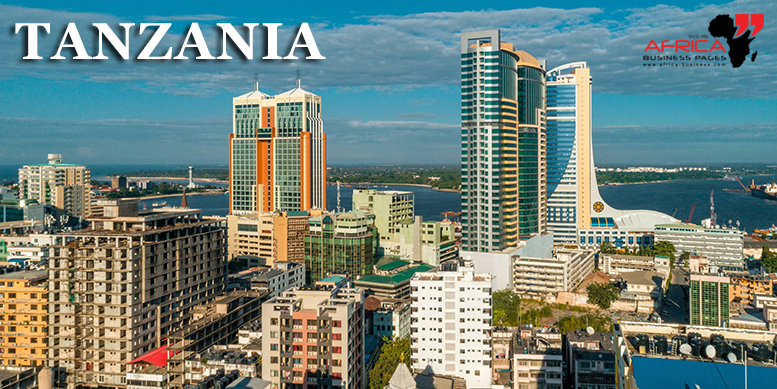
Tanzania is fast emerging as the financial hub for East Africa and consistently ranks among the top countries on the continent assessed for their aggressive efforts to expand and improve access to digital financial services. The country remains one of the fastest-growing economies on the African continent, richly endowed with natural resources. As of 2026, the country's population has approached 68 million people, with a rapidly accelerating urbanization rate that is fundamentally shifting consumer behavior and driving demand for modernized banking and retail infrastructure. Mobile money account ownership is exponentially more prevalent than traditional bank account ownership. Impressively, Tanzania records one of the highest scores globally in terms of mobile money accounts among women, highlighting massive strides in gender equity within digital financial services. Tanzania has experienced impressive, sustained growth rates over the past decade. Factoring in expanding industries such as mining, natural gas, and telecommunications, the Tanzanian government has projected robust GDP growth exceeding 6% for 2026. This growth is heavily underpinned by firm private consumption, massive infrastructure spending, and an expanding transport and logistics sector. The financial services ecosystem is a major beneficiary of this growth. Today, hundreds of millions of Mobile Money transactions are processed each month in Tanzania, regularly competing with or exceeding transaction volumes seen in neighboring Kenya. Mobile operators in Tanzania are leading the charge in connecting domestic mobile money ecosystems to global international remittance networks. Tanzania received a top-tier global ranking for mobile-based financial services capacity. The number of Mobile Money agent locations in the country far exceeds the number of traditional “brick and mortar” bank branches by a staggering ratio. Pioneering mobile operators like Tigo were among the first globally to pay interest directly on mobile money wallets to customers through services like Tigo Wekeza, distributing millions of dollars in dividends to local users. Similarly, telecommunications giants like Vodacom have revolutionized micro-savings and loans packages, amassing vast retail savings portfolios. International remittance providers note that Tanzanians living and working abroad send home hundreds of millions of dollars annually. Today, the vast majority of these international transfers are routed directly to mobile wallet services, demonstrating the critical role digital money plays for the diaspora and completely overtaking traditional cash pick-up and bank deposits. Latest Economic Developments (2025/2026) In 2026, Tanzania’s macroeconomic environment is anchored by the completion and operationalization of massive national infrastructure projects. The Julius Nyerere Hydropower Project has added over 2,100 MW to the national grid, drastically reducing industrial energy costs. Concurrently, the expansion of the Standard Gauge Railway (SGR) has revolutionized domestic freight and passenger transport, heavily boosting the manufacturing and agricultural sectors. Furthermore, Tanzania is aggressively capitalizing on the African Continental Free Trade Area (AfCFTA). A massive modernization of the Dar es Salaam port has cemented the country's status as the premier logistics gateway for landlocked neighbors like the DRC, Zambia, and Rwanda. This strategic positioning has triggered a surge in foreign direct investment (FDI) aimed at local agro-processing, industrial parks, and heavy machinery imports to support rapid industrialization. Top Non-Oil Commodity Imports in Tanzania (Est. Annual Value USD Millions) © Africa Business Pages Source: OEC Trade Statistics & Regional Estimates, 2026 The East African Market East Africa remains a global hotbed of innovation in financial services. Kenya and Tanzania are collectively driving the most comprehensive provision of digital financial services on the continent. The business models of regional champions—such as Equity Bank, M-PESA, and Tigo Pesa—are continuously studied and replicated worldwide. The Kenyan financial sector remains highly broad and well-developed, boasting roughly twice the sheer asset size of its neighbors. However, both Tanzania and Uganda possess explosive growth potential as their middle classes expand. Kenya is home to dozens of commercial banks and the best-developed microfinance segment in Sub-Saharan Africa. The cross-border interoperability now being established between East African central banks and mobile networks ensures that capital flows more freely across the region than ever before. Did you know? Tanzania's population has approached 68 million in 2026, driving one of the fastest urbanization and middle-class expansion rates in East Africa. Over 80% of all international remittances sent to Tanzania are now routed directly into mobile money wallets rather than traditional bank accounts. The operationalization of the Julius Nyerere Hydropower Project has added 2,115 MW of capacity, fundamentally securing the country's industrial power grid. Tanzania's Mobile Money agent network is over 30 times larger than the physical branch network of all traditional commercial banks combined. To support rapid industrialization, heavy machinery and vehicles remain the absolute dominant non-oil import commodities flowing through the Port of Dar es Salaam. East African mobile money systems are increasingly interoperable, allowing seamless, real-time digital currency exchanges between Kenya, Tanzania, and Uganda.

Kenya In Focus
folder_open East Africa
Kenya is the logistical hub for the East African region. Through its strategic geographical location, Kenya has emerged as a significant player in regional trade, investment, infrastructure development and general economic growth. Despite many of its social and economical problems, Kenya can be described as one of Africa's post-colonial success stories: relatively prosperous, comparatively stable and host to many international organisations. Few could have imagined that Kenya would have achieved so much given the violence and terror which marked the country's struggle for independence. Today, Kenya continues to maintain a stable government and a free-market economy with a vibrant private sector, and, through the Greater Horn of Africa Initiative, the country is in a strong position to maintain its significant role in regional trade, investment, infrastructure development and general economic co-operation for the region. During the last few years the country has made substantial progress in stabilising and liberalising its economy. Inflation has been brought under control and continues to decline. The budget deficit has been reduced and interest rates have come down. The liberalisation of import controls and foreign exchange rates have been major steps towards removal of trade barriers. Mombasa, the principal seaport of Kenya, has served as a distribution hub for the lucrative East African market providing connections to landlocked neighbouring countries. The port of Mombasa is linked to the world’s major ports with over 200 sailings per week to ports in Europe, North and South America, Asia, Australia, Middle East and the rest of Africa. Kenya and neighbouring countries - Uganda, Burundi, Rwanda, Sudan and Zaire - have established the Northern Corridor Transport Agreement which facilitates transportation of goods to and from the port of Mombasa. Kenya is also a member of the Preferential Trade Area (PTA) agreement embracing countries in Eastern and Southern Africa which has been transformed to the Common Market for Eastern and Southern Africa (COMESA) with a population of approximately 400 million. Exports and imports within member countries enjoy preferential tariff rates. Exporters to the Preferential Trade Area (PTA) regional market (19 countries of eastern and southern Africa) receive tax advantages and have the option to trade in local currencies. The market has a total population of 190 million and a GDP of over US$50 billion. The aim of the PTA is to eventually establish a common market with no barriers across member countries’ borders. While inviting foreign investments, Kenya also needs to hold out its own against aggressive moves by dominant financial markets like South Africa. A trade invasion by South Africa into the Kenyan market has seen a flood of South African manufactured goods into the country. This has had a bad effect on the local manufacturing sector, which is still trying hard to make a place for itself in the international market. There is an increasing concern among local manufacturers that South Africa is gaining an unfair advantage over Kenya by monopolising the Kenyan market. The trade deficit between Kenya and South Africa has been growing. It is interesting to note that South Africa has yet to dismantle the high tariff barriers that protected the country during its notorious apartheid era. Such protectionist policies have had an adverse effect on Kenya’s exports to South Africa, thereby resulting in a huge trade imbalance in favour of South Africa. On the other hand, South African government has been offering subsidies and incentives to its exporters - a move that has encouraged South Africans to invade the lucrative market in Kenya. Viewed against this scenario, the companies in United Arab Emirates offers Kenya a healthy, fair and mutually beneficial trade relationship. The UAE policy of free trade has attracted an increasing number of Kenyans to the country. Surprising as it may sound, the United Arab Emirates had emerged as the largest supplier of goods to Kenya in 1993, beating the traditional trading partner of Kenya, the UK, by a fair margin. Trade between Kenya and the United Arab Emirates is now poised for unprecedented growth. DUBAI: MAJOR SUPPLIER TO KENYA Kenya and the United Arab Emirates enjoy a multi-faceted and robust relationship that is being continually strengthened by high level contacts between the two governments as well as a growing relationship between the business and social organisations in the two countries. According to H.E. Chirau Ali Mwakwere, former Ambassador of Kenya to the UAE, the Emirates is one of Kenya’s most important trading partners. Recent trade figures indicate that the country is now the leading exporter to Kenya having overtaken those that had previously held the record. “Kenya has become an increasingly important trading partner for the United Arab Emirates over the past few years. In addition to being the major supplier of oil to Kenya, the UAE has emerged as a favoured shopping destination to which Kenyans travel regularly to purchase household and office electronic appliances, automobile spare-parts and even motor vehicles,’’ the former Ambassador said. In 2020, Kenya exported $381 million worth of goods to United Arab Emirates which included Refined Petroleum ($171 million), Tea ($55.7 million), and Sheep and Goat Meat ($40.2 million). During the last 22 years the exports of Kenya to United Arab Emirates have increased at an annualized rate of 15.7%, from $15.4 million in 1997 to $381 million in 2019. Kenya Imports from United Arab Emirates in 2020 Mineral fuels, oils, distillation products - $583.58 million Plastics - $84.57 million Electrical, electronic equipment - $41.10 million Salt, sulphur, earth, stone, plaster, lime and cement - $27.10 million Copper - $22.69 million Machinery, nuclear reactors, boilers - $11.55 million Miscellaneous chemical products - $9.11 million Arms and ammunition, parts and accessories - $8.41 million Iron and Steel - $8.10 million Vehicles other than railway, tramway - $7.39 million The UAE is Kenya's 5th largest export destination and the 4th largest import source. Kenya has now fully liberalised its economy by removing all obstacles that previously hampered the free flow of trade and foreign private investment. Among them were exchange controls, import and export licensing, as well as restrictions on remittances of profits and dividends, all of which no longer exist. These reforms have been painstakingly undertaken by the Kenyan government in order to create the necessary environment to attract foreign investment. The President of Kenya has taken a personal interest in these reforms. The adoption of the Treaty of East African Co-operation in March 1996, has created a common market of over 80 million people providing an attractive market for commerce and industry on a vast scale. Together with the Common Market for Eastern and Southern Africa (COMESA), to which all three East African countries belong, and the recently reinvigorated Inter-Governmental Authority on Development, a dynamic market of nearly 400 million people will provide unlimited opportunities for the potential investor in Kenya and its trading partners. Trade between Kenya and the UAE has been increasing every year, specially after trade restrictions and foreign exchange regulations have been lifted by the government of Kenya in order to boost foreign trade. An increasing number of Kenyan businessmen are now coming to the United Arab Emirates in search of new sources of supply and to market their goods in the lucrative Gulf market. Automobiles, tyres, batteries, ball bearings, consumer electronics, chemicals, second-hand cars, consumer goods, spare parts, machinery, textiles, and computers are some of the items that are being exported from the UAE to Kenya in increasingly large quantities. On the other hand, Kenya has been exporting coffee, tea, flowers, fruits and vegetables to the UAE, albeit in comparatively smaller quantities. Tyre dealers in Dubai have been exporting a wide range of tyres to Kenya on a regualr basis. Tyre exports from Dubai to Kenya have been growing in recent years and Kenya has also emerged as a logistical hub for the East African market – feeding supplies for neighbouring countries like Uganda, Tanzania and Rwanda from its port of Mombasa. Although crude oil forms a major portion of UAE exports to Kenya, other aspects of trade have also seen a substantial increase in volume in recent times. According to rough estimates, as many as 600-1,000 second-hand cars are being exported to Kenya through Sharjah every month. These right-hand drive cars are being specially imported from Japan and shipped to Kenya by traders in Sharjah’s expansive second-hand car mart. "There is a huge demand for quality second-hand cars in Kenya. Second-hand car dealers in Sharjah and Dubai have been the major sources in meeting this increasing demand,’’ says John Makau, interim secretary-general of the Kenya Business Advisory Committee, a special task force formed under the patronage of the Kenyan Embassy to promote Kenya’s business interests in the UAE. "The trading of second-hand cars has received a further boost by the decision of the Kenya government to do away with foreign exchange regulations, thereby making it easier for Kenyan businessmen to pay for their overseas purchases," he said. The increased trade activity between Kenya and the UAE is reflected in the increased air traffic between the two countries. A few decades back, only Kenya Airways and Pakistan International Airline (PIA) were operating on the Dubai-Nairobi sector whereas now several other airlines, including Emirates Airline, Etihad, flydubai, Air Arabia and Gulf Air, are plying this route with increased frequency. It is estimated that as many as 3,000 businessmen from Kenya are visiting the UAE every month. "One of the main advantages of doing business with the UAE is the fact that I can ship an assortment of goods in one container - something I can’t do in the Far East,’’ says Alfonso Samara, a Kenyan businessman who was in Dubai to buy a variety of goods for sale in Nairobi. “In the Far East, they will sell you nothing less than a container load if you want wholesale prices, whereas in Dubai I am able to buy a variety of goods on wholesale prices even if I purchase much less than a container load,’’ he explains. As the relationship between UAE and Kenya develops and grows, many new doors will be opened and heightened cooperation along with booming trade and investment will serve both countries well. KENYA BUSINESS ADVISORY COMMITTEE Serving as a catalyst in the growing trade ties between the United Arab Emirates and Kenya, the Kenya Business Advisory Committee of the UAE is playing a key role in enhancing the commercial and trading relationship between the two countries. The Committee, founded by leading Kenyan businessmen and professionals in the UAE, has a two-fold objective of promoting Kenyan goods and services in the UAE and of promoting the Emirates as a viable source of goods and services for Kenya. It works in close association with the Kenyan Embassy in Abu Dhabi and undertakes a variety of functions. These include the publication of business handbooks, organisation of trade fairs and seminars, provision of business advisory services to commercial and government organisations, organising visits of business delegations as well as encouraging UAE investors to visit Kenya. Providing the background to the setting up of the Committee, Mohamed Rashaad, Interim Chairman of the Kenya Business Advisory Committee, said: “The Committee was convened in September 1993 by a group of leading Kenyan businessmen and professionals resident in the UAE, primarily to promote bilateral trade between the two countries. It had the help and invaluable guidance of the then Kenyan Ambassador to the UAE, H.E. Mude Dae Mude and his predecessor, H.E. Riyanga. It was under their patronage that this organisation has thrived." From a trade standpoint, Kenya is of considerable importance to UAE businessmen. Like Dubai in the Gulf, the country is a regional distribution hub serving eastern and central African countries, whilst the UAE is also undoubtedly strategically placed with a reach that spans the Middle East, the Indian Sub-continent and the CIS states. Both countries also have in place well developed and modern infrastructure upon which their roles as regional economic powerhouses have been developed. Both countries are within reasonable proximity of each other, being only five ours flying time and six days sailing time along the ancient sea trade routes. These and other such factors clearly make both countries natural trading partners and the Kenya Business Advisory committee seeks to exploit these to achieve its objectives. “Recent economic liberalisation measures adopted by the Kenyan government - that include removal of import restrictions on most items, lowering of import tariffs on a range of goods, withdrawal of foreign exchange restrictions and adoption of attractive investment and export promotion incentives - have put Kenya in an advantageous position to expands its niché in the international market,’’ said John M. Makau, Interim Secretary-General of the Kenya Business Advisory committee. Related Articles

Kenya emerges as business hub of COMESA
folder_open East Africa
Kenya has further consolidated its status as the gateway to East Africa and a leading trade hub in the region. The country tops the list of highest exporting countries in the 19-member COMESA trading bloc, emerging as the top performer in the regional East African market. In recent years, Kenya has also been labelled as a viable business hub in the East African region and many foreign companies have set up assembly plants in Kenya to penetrate the lucrative markets in the region. By manufacturing in Kenya, the businesses are able to transport their goods within COMESA member countries without paying taxes, thereby adding to their profit margins. Several Asian manufacturers, predominantly from India and China, have established warehouses in Kenya where they send the semi-finished goods to, and then use EAC trade protocols to move them around East African countries like Tanzania, Uganda and Rwanda. In such a scenario, many local manufacturers have blamed the government for not devising appropriate policies to protect the local manufacturing sector from unfair competition. Competition from overseas investors and businesses is forcing local businesses in Kenya to reduce their profit margins in order to stay competitive in the price-sensitive markets of East Africa. By offering better products and lower prices, these new businesses are challenging the monopoly of many well- established businesses in Kenya. Top African Economies by GDP Volume © Africa Business Pages Last year, Kenya imported goods valued at over $22 billion and exported goods worth over $5.5 billion. Egypt exported goods worth $54 billion and imported from other COMESA member states goods valued at over $2.2 billion. Kenya’s Economic Ascendancy: East Africa’s Trading Gateway Kenya has firmly consolidated its position as the premier gateway to East Africa and the region's undisputed commercial hub. Serving as the top performer in the regional market, Kenya continues to lead the 19-member COMESA (Common Market for Eastern and Southern Africa) trading bloc in export volume. The nation's economic landscape entering 2026 reflects a resilient and diversified market that is capitalizing on strategic trade policies, digital innovation, and strong regional integration. Recent Developments Reshaping Regional Trade Opening the Sugar Market: After 24 years of protectionist policies, Kenya ended its long-standing COMESA sugar safeguards in late 2025, shifting to a duty-free regime for COMESA and East African Community (EAC) partners. This historic move allows for less restrictive regional trade and is already driving down retail sugar prices domestically. Innovative Debt Management: To alleviate debt-servicing costs and boost the economy, the Kenyan government recently secured a $1.5 billion financial facility from the UAE and brokered a landmark $1 billion debt-for-food swap deal with the United States in late 2025. Record Foreign Exchange: The country's economic momentum has been bolstered by record-high foreign exchange reserves, heavily supported by increased hard currency exports. Top 5 East African Economies by Projected GDP (2026) © Africa Business Pages By the Numbers: Kenya's 2026 Economic Outlook GDP Growth: The Kenyan economy demonstrated strong resilience with a 4.8% growth rate in 2025, and is projected by the World Bank to grow at approximately 4.9% to 5.0% in 2026. Regional Leadership: Kenya, alongside Ethiopia, is a primary engine driving East Africa's economic momentum, with the broader East African region projected to accelerate to a 5.8% growth rate in 2026. Inflation Control: After reaching 7.7% in 2023, inflation in Kenya has trended downward and is expected to stabilize around 4.5% to 5% throughout 2026, helping to preserve macroeconomic stability. Sector Contributions: Services remain the backbone of the expansion—accounting for over 50% of the GDP—propelled by urbanization, robust ICT growth, and financial services, while agriculture contributes around 24.4%. By navigating structural reforms and enhancing trade relations within COMESA, Kenya is not just surviving global economic shocks, but actively setting the pace for East African economic growth

Ethiopia Targets Growth
folder_open East Africa
Ethiopia has been consistently earning more than US$3 billion from the export sector since 2021. This year too, the revenue earned from foreign trade in the first few months exceeded that of the same time of the previous year by more than US$250 million particularly through the export of gold, horticulture, livestock, textiles and minerals. Over the past 10 years, Ethiopia's GDP has grown by an average of 9.1%, making it one of Africa's fastest-growing economies. The most significant destinations for Ethiopian exports have been Belgium, Britain, China, Djibouti, Egypt, France, Germany, Japan, India, UAE, Saudi Arabia, Somalia, Sudan Switzerland and the US. In related news Ethiopian customs and Revenue Authority, Adama Branch reported collecting more than 15 billion birr in revenue from various exports last year. The revenue earned is greater than that of the same period in the previous year by more than 1.5 billion birr. The authority has provided more than 2 billion birr in tax exemption for flower exporters and on imported items during the same period. The revenue office has been able to meet 90 per cent of its target revenue and the Customs and Revenue has recovered more than 20 million birr it had been defrauded of by tax evasion. The institute expects better performance this year by fostering improved efficiency and also because additional large companies are to launch production in the coming months which will play a significant role in helping meet the projections for this year. Increased Foreign Direct Investment in the leather sector will help meet sector targets according to sources. Notable international companies which have entered the sector in Ethiopia include the Chinese Hujieang, one of the largest footwear manufacturers in world. The production of this company alone could go a long way towards equaling the exports for the previous year. © Africa Business Pages const ctxTop10 = document.getElementById('top10EconomiesChart'); new Chart(ctxTop10, { type: 'bar', data: { labels: [ "South Africa", "Egypt", "Algeria", "Nigeria", "Morocco", "Kenya", "Ethiopia", "Angola", "Côte d'Ivoire", "Ghana" ], datasets: [ { label: 'Lower Projection ($B)', data: [410, 347, 268, 188, 165, 131, 117, 113, 94, 88], backgroundColor: 'rgba(54, 162, 235, 0.6)', borderColor: 'rgba(54, 162, 235, 1)', borderWidth: 1, borderRadius: 4 }, { label: 'Upper Projection ($B)', // Note: Côte d'Ivoire only had one figure (94), so both bars will be equal height data: [479, 429, 317, 377, 194, 147, 121, 152, 94, 118], backgroundColor: 'rgba(255, 159, 64, 0.6)', borderColor: 'rgba(255, 159, 64, 1)', borderWidth: 1, borderRadius: 4 } ] }, options: { responsive: true, // Adds a cascading animation effect from left to right animation: { y: { duration: 2000, delay: (context) => context.dataIndex * 100 } }, plugins: { title: { display: true, text: "Africa's Top 10 Economies (Nominal GDP 2025–2026 Projections)", font: { size: 18, weight: 'bold' }, padding: { top: 10, bottom: 25 } }, tooltip: { callbacks: { label: function(context) { let label = context.dataset.label || ''; if (label) { label += ': '; } if (context.parsed.y !== null) { label += new Intl.NumberFormat('en-US', { style: 'currency', currency: 'USD' }).format(context.parsed.y) + ' Billion'; } return label; } } }, legend: { display: true, position: 'bottom' } }, scales: { y: { beginAtZero: true, title: { display: true, text: "GDP (in Billions USD)", font: { weight: "bold" }, padding: { bottom: 15 } } }, x: { ticks: { autoSkip: false, maxRotation: 45, minRotation: 45 } } } } }); Ethiopia earned an average of more than US$320 million per year through the export of leather and leather products in the last five years. The revenue earned through leather exports by Ethiopia is expected to grow steadily in the coming years according to the projected figures released by the Leather Products Development Institute. On the whole, the Ethiopian economy is expected to sustain an 11+ per cent growth in the current fiscal year according to the Prime Minister. The economy has grown at an average rate of 11 per cent in the last few years and the government expects to maintain the growth rate in the current financial year. Ethiopia's automobile industry is also poised for growth as new investments into Ethiopia are turning the country into the automobile hub in Africa. Ethiopia's Tourism Earnings Up Ethiopia earned US$485 million from the tourism sector in the last financial year according to the Ministry of Culture and Tourism. International tourist arrivals in Ethiopia grew by 15% in 2025, according to UN Tourism reports cited in early 2026. Significant revenue was earned from 1.5 million tourists who were entered the country in 2025 to visit an range of tourist attractions around the country . The number of tourists into the country increased by 11 per cent in the last year while the revenue for the sector showed an increase by 58 per cent in the financial year as compared to the previous budget year . A significant percentage of the tourists who visited the country’s historical sites came from Germany, England, France, Italy and the United States. The increase in the number of tourists and in the revenue from the sector can be attributed to the promotional work conducted and the enhanced infrastructure around the historical sites claimed Awoke. The tourism sector has generated more than 256,000 jobs so far he said.
Tanzania: Business Scenario
folder_open East Africa
Tanzania is a glaring example of a successful transition from state socialism to an open, dynamic market economy. Successive governments, culminating in the pro-investment reforms under President Samia Suluhu Hassan, have embraced liberalization policies that have driven down trade tariffs, paved the way for multinational corporations, and cemented the country as an East African economic powerhouse. The liberalization process, which began in the mid-1980s, gradually opened Tanzania's borders to foreign companies and international investment. Today, Tanzania stands as one of the most stable and fast-growing economies in Sub-Saharan Africa. The country boasts immense natural wealth, with tourism and mining acting as the top foreign exchange earners, alongside traditional agricultural exports like coffee, cashew nuts, and cotton. Forest land constitutes one of the most substantial natural resources of the country. Among the many hardwoods found are mahogany and camphorwood. The country abounds in wildlife, including antelope, zebra, elephant, hippopotamus, rhinoceros, giraffe, lion, leopard, cheetah, and monkey. Tanzania Real GDP Growth Data Source: IMF World Economic Outlook | © Africa Business Pages Latest Economic Developments Looking ahead through 2025 and 2026, Tanzania's macroeconomic outlook remains robust and highly attractive to foreign direct investment. According to recent World Bank and IMF projections, the country’s real GDP is forecasted to expand by a strong 6.3% in 2026. This resilience is anchored by heavy public spending on strategic infrastructure, a rebound in agricultural exports, and a revitalized tourism sector that consistently draws international visitors. Furthermore, the government's commitment to maintaining inflation in the stable 3% to 5% range provides a secure, predictable environment for long-term commercial planning. The mining and energy sectors are acting as critical pillars for this accelerated growth. Tanzania is not only Africa's fourth-largest producer of gold, but it is also aggressively positioning itself in the global supply chain for "green energy" transition materials, with vast, newly commercialized deposits of nickel and graphite. Combined with continuous improvements to the national grid and the expansion of the Dar es Salaam port, these developments have significantly reduced logistical bottlenecks, empowering multinational companies to seamlessly connect Tanzanian resources with global markets. Tanzania Importers Directory The TANZANIA BUSINESS DIRECTORY is a perfect starting point for international exporters, manufacturers, traders, and merchants looking to establish direct contacts with their business counterparts in the lucrative Tanzania market. The directory lists wholesalers, importers, retailers, business houses, as well as commission agents operating in Tanzania. More than 65% of the economically active population is engaged in farming, and agricultural products account for a massive share of annual exports. A series of modern development plans has stressed the growth of the agricultural cash economy and a reduction in dependence on imports for manufactured goods. Coffee, cotton, tobacco, tea, and cashew nuts make up the bulk of agricultural exports. Main imports include petroleum, machinery, transportation equipment, iron and steel, and other metals. China, India, the United Arab Emirates, and South Africa are currently among the nation's leading trade partners. Historical Ties: The Zanzibar Connection As early as the 8th century AD, Zanzibar and other islands off the coast of East Africa became bases for Arab merchants trading with the mainland. In the course of time, some of these—including Zanzibar and Kilwa—became independent Muslim sultanates with mixed Arab and African populations. In the 18th century, Zanzibar and Pemba were subject to the sultans of Oman, leading to the establishment of a massive commercial empire driven by the trade of cloves and spices. Today, Zanzibar is known throughout the world as the jewel of the Indian Ocean and has a romantic, colorful history of seafarers and explorers. Once the trading center of East Africa, Zanzibar attracted Sumerians, Assyrians, Phoenicians, Arabs, Chinese, and Malays. The great explorers, Burton, Speke, Livingstone, and Krapf, continued their epic journeys from these very shores. Tourist Heaven From the snows of Mount Kilimanjaro and the vast plains of the Serengeti to the barefoot luxury of its Indian Ocean islands, Tanzania offers some of the most wonderful locations in Africa. Tanzania is home to one of Africa's most magnificent game reserves: the seemingly endless plains of the Serengeti, where one of the world's greatest natural spectacles—the annual migration of some two million wildebeest followed by their predators—can be observed. Close to the Serengeti is the Ngorongoro Crater, a microcosm of East African game and landscapes and a photographer's paradise. It is the largest unbroken caldera in the world. In the south of Tanzania lies the Selous game reserve, roughly the size of Switzerland and an excellent park in which to see elephants in their natural, undisturbed habitat. Zanzibar is a short flight from Dar es Salaam and is the perfect island on which to relax after a safari. Lapped by the crystal clear waters of the Indian Ocean, Zanzibar offers superb diving and snorkeling. The unspoiled beaches and rustic chalets are the perfect cure to the stress of modern life. Tanzania and Zanzibar make an ideal two-week destination: spend a week on safari, and then wind down on one of the most relaxing islands on earth. Did You Know? Accelerated Growth: Tanzania's economy is one of the most resilient in Sub-Saharan Africa, with its real GDP projected by the IMF to expand by a robust 6.3% in 2026. The Exclusive Gem: Tanzania is the only place on Earth where the rare, blue-violet gemstone Tanzanite can be found, specifically in a small mining area near the Mererani Hills. Critical Mineral Hub: Beyond being Africa's fourth-largest gold producer, Tanzania is quickly becoming a vital global supplier of "green transition" minerals, including massive deposits of graphite and nickel. The Roof of Africa: Mount Kilimanjaro is not only the tallest mountain in Africa but also the highest single free-standing mountain above sea level in the entire world. The Great Migration: The Serengeti hosts the largest terrestrial mammal migration in the world, where over two million wildebeest, zebras, and gazelles traverse the plains annually.
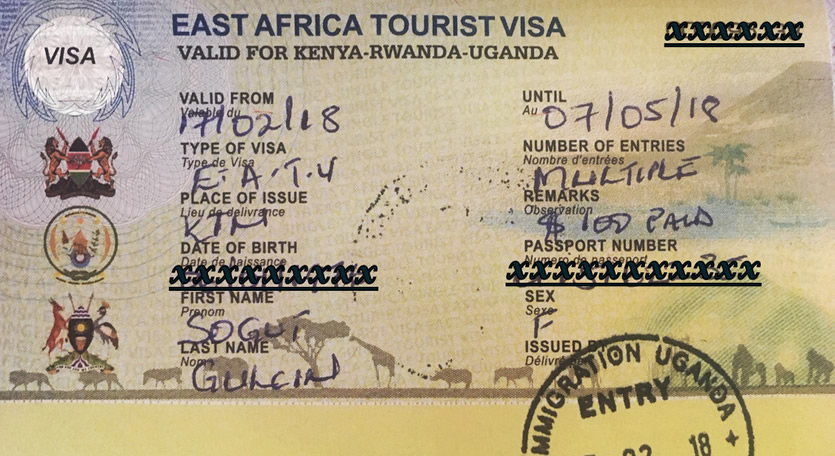
Single-Entry Visa for East Africa
folder_open East Africa
A groundbreaking cross-border initiative is successfully revolutionizing international travel across the region. The East Africa Tourist Visa (EATV) is a joint initiative spearheaded by Kenya, Rwanda, and Uganda designed to market the region as a single, highly competitive global tourism destination. The EATV is a multiple-entry visa that allows tourists to travel freely between these three participating nations for up to 90 days without incurring extra border fees. "We became intensely aware that international travelers were frustrated with paying for multiple, separate visas when their safari itineraries naturally crossed our borders," noted regional tourism officials. Before the unified visa, tour operators struggled to seamlessly package regional trips. Today, by standardizing access, the region is successfully showcasing its interconnected natural wonders—from the savannahs of Kenya to the gorilla trekking highlands of Rwanda and Uganda. Without an East Africa Tourist Visa, travelers easily spend upwards of $150 to visit the three countries individually. Those standard visas are strictly single-entry, meaning a return visit to any country on the same trip requires paying the fee again. The unified EATV, available for a flat rate of $100, solves this entirely, offering exceptional value and flexibility. It is important to note that the EATV expires automatically if a traveler exits the three-country zone (for instance, by crossing into Tanzania, which has historically maintained its own separate visa system, though it remains a heavyweight in EAC tourism). To return to the EATV zone after exiting, a new visa must be applied for. Nonetheless, the unified marketing strategy has been an overwhelming success, drawing millions of international tourists who now view East Africa as one massive, borderless adventure. EAC Tourist Arrivals (In Millions) Data Source: Regional Tourism Boards & Market Projections | © Africa Business Pages Latest Developments: Digital Borders and Eco-Tourism As of 2026, the East African economic bloc is witnessing a massive resurgence in travel, driven heavily by sweeping digital transformations. Participating governments have aggressively rolled out fully integrated e-Visa portals and biometric border controls. This digital infrastructure has practically eliminated the infamous border-crossing delays that once plagued overland safari vehicles. Furthermore, vast investments in cross-border infrastructure—such as the expansion of regional Standard Gauge Railways (SGR) and upgraded airstrips near major national parks—are making it easier and cheaper than ever for tourists to hop between Nairobi, Kampala, Kigali, and Dar es Salaam. Economically, the region has pivoted strongly toward high-yield, sustainable eco-tourism. Rather than focusing solely on mass tourism, East African nations are increasingly prioritizing community-conservancy models. This ensures that a significantly higher percentage of lodge revenues and park fees go directly to the indigenous communities managing the wildlife corridors. This shift is not only drastically improving wildlife conservation efforts but is also injecting billions of dollars directly into rural economies, creating sustainable, long-term employment that is highly resilient to global economic shocks. The broader East African region remains one of the world's leading tourism hotspots, competing strongly with North and Southern Africa. Combined, the bloc expects to welcome over 10 million international visitors annually by the end of the decade. Major source markets driving this economic boom include the United States, the United Kingdom, Germany, France, China, and the Scandinavian countries. Did You Know? Massive Savings: The East Africa Tourist Visa costs exactly $100 and lasts for 90 days. Buying individual visas for Kenya, Uganda, and Rwanda would cost over $150 and would not allow multiple border crossings. The Great Migration: The world-famous Great Wildebeest Migration naturally crosses the border between Tanzania's Serengeti and Kenya's Masai Mara every year, requiring cross-border cooperation to protect the ecosystem. Economic Backbone: Tourism currently contributes over 8% to the combined GDP of the East African Community, serving as one of the largest sources of foreign exchange and formal employment. A Digital Frontier: All participating EATV nations now process these regional visas entirely online via dedicated e-Visa portals, eliminating the need for embassy visits before traveling.
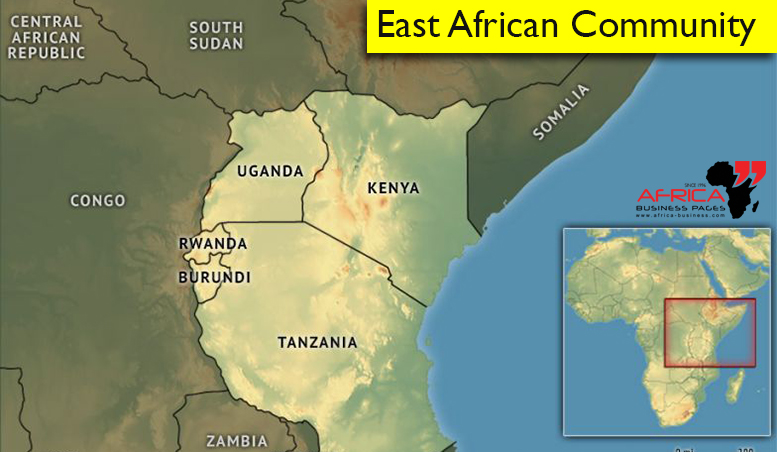
The East African Community (EAC) has evolved into one of the fastest-growing and most integrated regional economic blocs in the world. Originally revived in 2000 by the three founding states of Kenya, Uganda, and Tanzania, the trade bloc works towards economic policies that are fiercely pro-market, pro-private sector, and pro-liberalisation. By pooling resources and promoting seamless free trade within the region, the EAC aims to emerge as the undisputed economic powerhouse of the continent. In a historic ceremony held in Arusha, Tanzania, Kenya's former President Daniel arap Moi, Uganda's Yoweri Museveni, and Tanzania's Benjamin Mkapa formalized the original EAC treaty, paving the way for an economic and, ultimately, political union. Since that foundational moment, the bloc has experienced historic expansion, successfully admitting Rwanda and Burundi in 2007, South Sudan in 2016, the Democratic Republic of the Congo (DRC) in 2022, and the Federal Republic of Somalia in 2023. The primary goals of the EAC are to improve regional economies, elevate the quality of life, and foster unbreakable diplomatic relations among member states. Technocrats guiding the cooperation have termed it a "new chapter" in which the ideological mistakes that led to the collapse of the original 1977 EAC will never be repeated. Latest Economic Developments The recent admissions of the Democratic Republic of the Congo (DRC) and Somalia have fundamentally transformed the EAC’s economic landscape. The bloc now represents a colossal consumer market of over 300 million people with a combined GDP of more than $300 billion. By extending the EAC's reach from the Indian Ocean across to the Atlantic Ocean via the DRC, the region has unlocked unprecedented logistical corridors for cross-border trade, critical mineral exports, and robust agricultural exchange, making it a highly attractive destination for foreign direct investment. Furthermore, the ongoing implementation of the EAC Single Customs Territory has revolutionized regional logistics, drastically reducing cargo transit times and slashing non-tariff barriers along the critical Northern and Central transport corridors. Mega-infrastructure developments, such as the synchronized expansion of the Standard Gauge Railway (SGR) network and the harmonization of cross-border digital payment systems, are currently accelerating regional trade. These critical economic milestones are steadily paving the way for the bloc's next major pillar of integration: the East African Monetary Union. Today, the East African region covers a staggering landmass of over 5.4 million square kilometers. It possesses vast, untapped potential in mineral, water, energy, forestry, and wildlife resources, alongside booming agricultural, industrial, and eco-tourism sectors. Its people are bound together by a shared history, infrastructure, and the unifying regional language of Kiswahili. Global institutions have highly praised this integration. The United Nations has repeatedly lauded the creation and expansion of the regional body, calling it a vital "building block" for the broader African Economic Community. The UN firmly supports the commitment of East African nations to multilateralism and initiatives that strengthen the continent's capacity to navigate the complexities of globalization. While the region has historically had its fair share of trade disputes—often stemming from perceptions regarding Kenya's competitive manufacturing dominance—the implementation of the EAC Common Market Protocol has largely leveled the playing field. The elimination of international tariffs and the adoption of common external tariffs have created a highly equitable investment platform. Today, member states reap immense mutual benefits from economies of scale, regional food security networks, and seamless labor mobility. Did You Know? Eight Member States: The EAC has grown from its three founding members to eight: Burundi, Democratic Republic of the Congo, Kenya, Rwanda, Somalia, South Sudan, Uganda, and Tanzania. Coast to Coast: With the admission of the DRC, the East African Community now spans across the entire continent, connecting the Indian Ocean on the east to the Atlantic Ocean on the west. A Massive Market: The expanded EAC trade bloc now represents a combined population of over 300 million citizens, making it one of the largest single markets globally. A Shared Language: Kiswahili serves as the official lingua franca of the Community, deeply uniting the diverse populations across all member states. Ultimate Goal: The ultimate pillar of the EAC integration process is to form a Political Federation, creating a unified super-state with a single centralized government.
Preliminary request for participation in the trade show
place
calendar_today
Preliminary request for visitor registration
Visitor Registration
place
calendar_today