
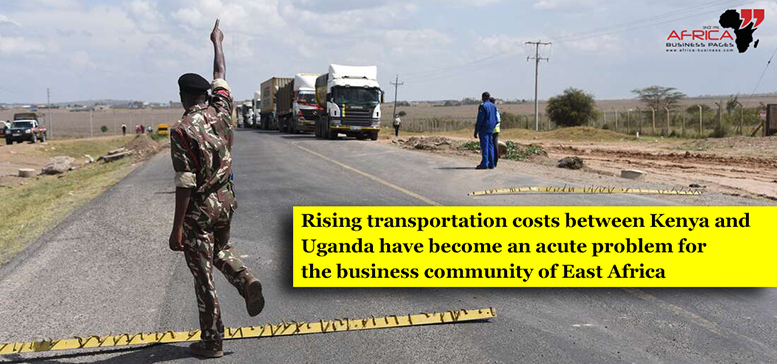
Rising transportation costs to ship goods between Kenya and Uganda have historically been an acute problem for the business community of East Africa. To combat this, Ugandan traders have aggressively pushed to empower the National Trade and Facilitation Forum (NTF) and regional shippers’ councils to fight soaring transport costs on the country’s vital Northern Corridor. The NTF aims to reduce logistics costs through the removal of non-tariff trade barriers and the harmonization of transport policies across the corridor, which also serves the Democratic Republic of Congo, Rwanda, Burundi, and South Sudan.
The concerted push for reform follows years of steep transport and shipping costs along the East African route. Traders attribute these inflated costs to bureaucratic Customs systems, lengthy cargo forwarding processes, and historical infrastructure deficits. High port storage charges, expensive transit bonds, container losses at the Mombasa port, and security concerns have continually hampered East Africa's competitiveness in international trade.
The cost disparity is stark: historically, while it costs between $1,400 and $1,700 to ship a 40-foot container thousands of miles from Dubai to Mombasa, the average inland transportation and clearing cost for that exact same container over the short distance between Mombasa and Kampala can skyrocket to $3,800.
This massive logistical overhead forces traders to pass extra costs directly onto consumers, making the prices of regional goods less competitive globally. Almost 50 per cent of the costs incurred by most Ugandan traders go solely into handling port and transport expenses. If these logistical bottlenecks are mitigated, domestic price levels would fall significantly.
Both the Uganda Revenue Authority (URA) and the Kenya Revenue Authority (KRA) have implemented measures to ease these impediments. The authorities introduced 24-hour clearing schedules at the Kenya-Uganda border posts, and massive investments in customs digitization and electronic cargo tracking have significantly reduced manual clearing times. However, traders still face strict demurrage charges and costly deposits paid to shipping lines, which are forfeited if cargo is delayed in transit.
Overcoming the Meter-Gauge Legacy
For decades, the corridor’s traditional meter-gauge road and rail operated far below capacity due to severe dilapidation. The legacy of the failed Rift Valley Railways (RVR) concession—which was granted in 2006 but ultimately terminated by both governments in 2017 due to chronic underperformance—left the region relying heavily on expensive road freight.
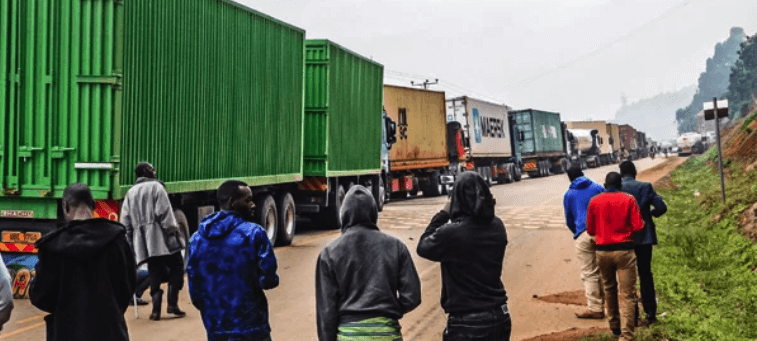
Historically, importers of heavy raw materials utilized the Lake Victoria marine route, but marine logistics suffered immensely following ferry collisions in the mid-2000s that decimated the fleet. While the old meter-gauge railway took up to a month to move goods to Kampala, road freight—charging upwards of $3,500 for a single container—became the reluctant default for heavy industries like steel, plastics, and soap manufacturing.
The SGR and Digital Corridors
The Standard Gauge Railway (SGR) Revolution: To bypass the historical failures of the meter-gauge network, East Africa has entered a new era of mega-infrastructure. Kenya has successfully operationalized the Mombasa-Nairobi-Naivasha Standard Gauge Railway (SGR), drastically cutting the time it takes to move cargo out of the congested port. Entering 2026, Uganda is aggressively pursuing the funding and construction of its Malaba-Kampala SGR segment. Once these modern rail networks are seamlessly linked, freight that once took weeks by road will reach Kampala in under 24 hours, effectively slashing inland transit costs by more than half and revitalizing the region's industrial competitiveness.
Digitization and the Single Customs Territory: Complementing physical infrastructure, East Africa has fully embraced digital trade facilitation. The implementation of the East African Community (EAC) Single Customs Territory allows Ugandan importers to clear their goods electronically while the cargo is still at the Port of Mombasa, eliminating redundant border checks. Furthermore, the operationalization of One-Stop Border Posts (OSBPs) at critical junctions like Malaba and Busia, combined with the momentum of the African Continental Free Trade Area (AfCFTA), has reduced border dwell times from several days to mere hours, injecting unprecedented efficiency into the Northern Corridor.
Did You Know?