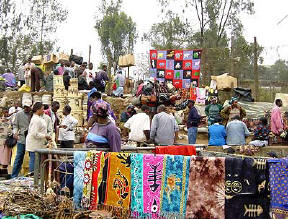

Africa has rapidly gained attention as the premier global investment hotspot and is frequently called “the final frontier.” A decade ago, the worldwide boom in emerging market investments initially benefited Africa along with other regions, but today, many African countries stand entirely on their own as highly attractive, self-sustaining investment destinations.
The African continent is consistently home to several of the fastest-growing economies in the world, and foreign direct investment (FDI) is rapidly increasing in both volume and sophistication. European, Asian, and Middle Eastern companies of all sizes recognized the African opportunity early on and have established a formidable head start in key sectors.
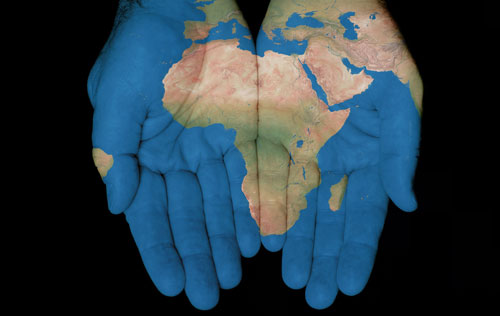
As growth slows in more developed global markets, geographic diversification is a logical next step for businesses of all sizes. Many African markets offer incredibly attractive opportunities for mid-sized companies. As an early mover, a company stands to secure the most lucrative local partnerships, the best emerging talent, and highly generous government tax incentives.
While specific regional risks remain, the narrative surrounding African investment has profoundly matured. First, many of the perceived historical risks are myths heavily skewed by outdated reporting. Second, careful analysis demonstrates that Africa is not a monolith; an informed investor can find the perfect fit among its 54 distinct economies. Finally, this is not a journey that a mid-sized company has to take alone, as B2B trade networks and digital supply chain resources are increasingly sophisticated and accessible.
Latest Economic Developments in Africa
According to the latest African Economic Outlook report, Africa's economic growth is projected to accelerate to a robust 4.3 percent in 2026. This upward trajectory is primarily driven by improving macroeconomic stability, easing domestic inflation, and a surge in both agricultural and industrial output. East African countries—notably Rwanda, Uganda, and Tanzania—continue to lead the continent with the strongest performance metrics, solidifying the region's position as a global growth engine despite residual global economic uncertainties.
Furthermore, the African economic landscape is being structurally transformed by the African Continental Free Trade Area (AfCFTA) and an aggressive policy shift toward local value addition. Rather than purely exporting raw materials, nations are heavily investing in domestic processing—from agricultural commodities to critical minerals and green energy infrastructure. Consequently, foreign direct investment is rapidly diversifying away from traditional extractives into telecommunications, digital infrastructure, and pan-African logistics networks, creating unprecedented opportunities for global businesses to scale regionally.

Top 7 Most Imported Products into Africa
Infrastructure and Market Integration
The rate of foreign investment has multiplied tremendously over the last decade, with massive capital inflows from China, India, the UAE, Brazil, and Turkey. Today, the rate of return on foreign investment in Africa remains higher than in almost any other developing region. Rising global demand for critical commodities and energy is driving international buyers to forge new, highly equitable types of partnerships with African producers.
“As was the case at the start of the Asian economic miracle decades ago, a relatively small increase in strategic investments in Africa can produce incredibly high productivity improvements. The return on investments in Africa is among the highest in the world.”
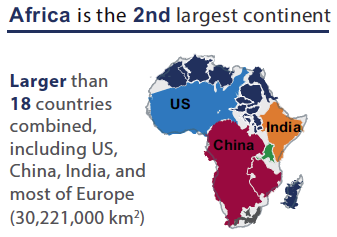
It is undeniable that Africa has become intrinsically integrated into the world economy. Its trading partners are increasingly diversified, opening up unprecedented new development opportunities. Africa’s trade with the rest of the world has surged massively since the turn of the century. Trade with emerging powers like China, India, and the UAE, which used to represent a fraction of the market, now dominates the import-export landscape.
Regional trade is also booming. With a drop in customs duties and a reduction in trade restrictions through the AfCFTA, intra-African trade is expanding at record rates. Additionally, Africa is benefiting from a massive demographic dividend. The continent is home to over 1.4 billion people, and by 2050, it is projected to reach 2.5 billion. Today, the median age is roughly 19, creating the largest, youngest, and most digitally connected consumer base on the planet.
Today, more than 40 percent of Africans live in rapidly expanding urban areas. The number of households with discretionary income is projected to rise exponentially over the next decade. By 2030, the continent’s major metropolises will represent a combined consumer spending power exceeding $2.5 trillion, cementing Africa as a paramount destination for consumer goods, services, and industrial equipment.