
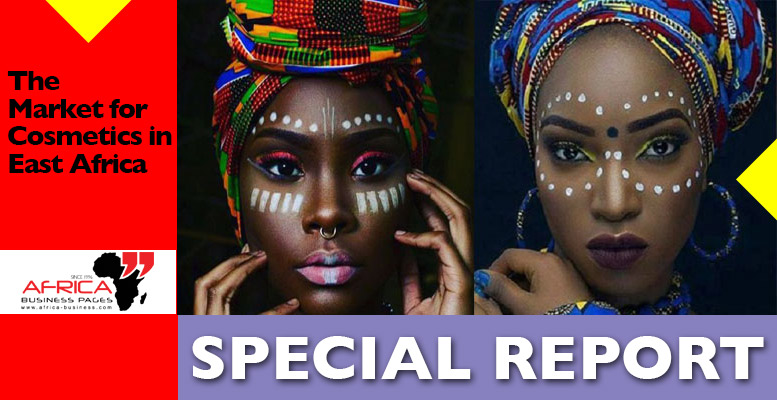
A study conducted by Africa Business Pages across five key countries in the East Africa region (Kenya, Uganda, Tanzania, Ethiopia, and Mozambique) revealed that consumers in East Africa are increasingly demanding premium personal care products that are tailor-made to suit their specific demographic needs and environmental requirements.
A clear case in point is the booming hair care sector, which, with combined regional sales now exceeding $1.2 billion across the five countries in 2026, is the undisputed leading cosmetic product category sold across East African markets. "The trend among women in East Africa has dramatically shifted away from using harsh commercial chemical relaxers on their hair," notes Suzie Wokabi, founder of SuzieBeauty Ltd., a renowned pioneer and the first major Kenyan cosmetics brand. "Consumers are actively transitioning towards natural hair movements, preferring hair care products that are organic, sulfate-free, and offer hydrating and smoothing benefits specifically formulated for ethnic hair textures."
Historically, there was a severe dearth of such Afrocentric hair care and skin care products. This gap sparked a massive DIY movement, with thousands of videos appearing on YouTube and TikTok of African women using local, natural ingredients—such as raw shea butter, pure aloe, and indigenous essential oils—to craft their own hair and skin care regimens.
Top Cosmetic Brands in Africa by Estimated Market Share (%)

© Africa Business Pages
Source: Regional FMCG & Retail Market Estimates, 2026
Among the major international players, L’Oréal has been exceptionally successful in breaking into the East African market by introducing mass-market, culturally adapted products alongside its affordable global brands like Garnier and L’Oréal Paris.
L’Oréal was remarkably quick to recognize the urgent need for Afrocentric beauty products specifically dedicated to meeting the nuances of African consumers. After detailed scientific research and in-depth market studies at their specialized regional R&D centers, L’Oréal scaled the famous SoftSheen-Carson brand—the first worldwide brand explicitly targeted towards consumers of African descent. This was seamlessly followed by Mizani, another premium product line that became an instant operational standard in professional hairdressing salons across East Africa.
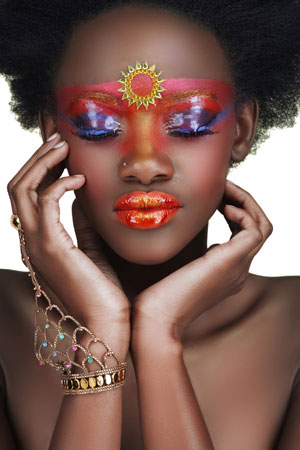 However, L’Oréal tasted its most dominant success in the East African markets with its Dark & Lovely brand. The strategic acquisition of Interconsumer Products Ltd. (a major Kenyan health and beauty manufacturer) further boosted their local supply chain efficiency, helping L’Oréal establish itself as an absolute leader in the Afro-specific market. L’Oréal’s operations in East Africa now include extensive vocational education for salons and hairdressers, as well as the development of formalized retailing structures for beauty products. The Middle East and Africa segment remains the fastest-growing geographical segment for global beauty conglomerates, consistently registering double-digit year-on-year growth.
The Demographics of the Next Consumer Hot Spot
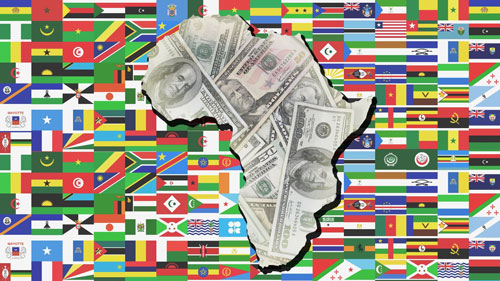
 Long dubbed the next consumer hot spot, Sub-Saharan Africa is experiencing explosive urbanization and economic diversification. The African continent is currently home to over 1.4 billion consumers, with a rapidly expanding middle class rushing to purchase a wide range of premium cosmetics and imported beauty products. Entering 2026, the Sub-Saharan African economy boasts a cumulative GDP value surpassing $2.5 trillion, presenting an immense retail footprint.
East Africa alone is home to hundreds of millions of people, where aggregate consumer spending has eclipsed $200 billion in 2026. Sub-Saharan Africa's demographic dividend—characterized by high birth rates, a median age under 20, and a rising professional middle class—makes it the ultimate frontier market. The established market leaders, South Africa and Nigeria, are closely followed by key, high-growth frontier markets: Kenya, Ethiopia, Tanzania, Ghana, and Cameroon.
Why Africa?
Compounded with high population growth and a shifting demographic profile (which is positively correlated with a rise in disposable income), Africa presents vast potential for the fast-moving consumer goods (FMCG) and cosmetics market. The African region as a whole is forecast to be home to nearly 2.5 billion people by 2050—surpassing the projected populations of China or India. Thus, looking solely at the sheer volume of the consumer base, the potential of the African retail market is unprecedented. By 2030, Africa’s top 18 cities could boast a combined spending power of over $1.3 trillion, making the continent an absolutely vital target for companies seeking growth outside saturated developed markets.
The Booming African Cosmetics Sector
As of 2026, the African cosmetics industry is undergoing a massive structural shift characterized by the explosive rise of "hyper-localized" indigenous brands. Rather than relying solely on imported Western formulas, a new wave of African entrepreneurs is leveraging indigenous botanicals—like marula oil, baobab, and moringa—to create premium, export-quality organic skincare lines. These homegrown brands are fiercely competing with global multinationals, capturing up to 30% of the market share in niche categories by appealing directly to the cultural identity and specific dermatological needs of African consumers.
Simultaneously, the retail distribution model has been entirely disrupted by social commerce and digital B2B supply chains. Platforms like Instagram and TikTok have become the primary marketing engines for beauty products in urban centers like Lagos, Nairobi, and Johannesburg, allowing direct-to-consumer (D2C) brands to completely bypass the high overhead costs of traditional brick-and-mortar retail. Additionally, B2B e-commerce platforms are actively digitizing informal beauty kiosks, allowing small-scale salon owners to restock inventory directly from manufacturers via mobile apps, thereby streamlining the notoriously fragmented beauty supply chain.
Finally, the full operationalization of the African Continental Free Trade Area (AfCFTA) is fundamentally transforming the manufacturing landscape. To avoid severe foreign exchange (FX) shortages and the high tariffs historically associated with importing finished cosmetics, global beauty conglomerates are rapidly shifting their strategies from importation to local manufacturing. Massive capital is being deployed into setting up cosmetic formulation and packaging plants in strategic hubs like Kenya, Ghana, and South Africa, allowing these brands to trade tariff-free across borders while heavily reducing supply chain lead times.
Did you know?