
Battery manufacturers in East Africa are actively collaborating with regional governments to secure their supply chains and protect consumers from an influx of substandard imports. Following historical challenges faced by major players like Associated Battery Manufacturers (ABM) due to predatory scrap lead exports, the region is now aggressively restructuring its automotive battery sector. Local manufacturers—including ABM, Uganda Battery Manufacturers, and Tanzania's Yuasa Ltd—have successfully lobbied for stricter quality control standards at ports of entry to block cheap, short-lifespan imports that fail to withstand harsh African road conditions.
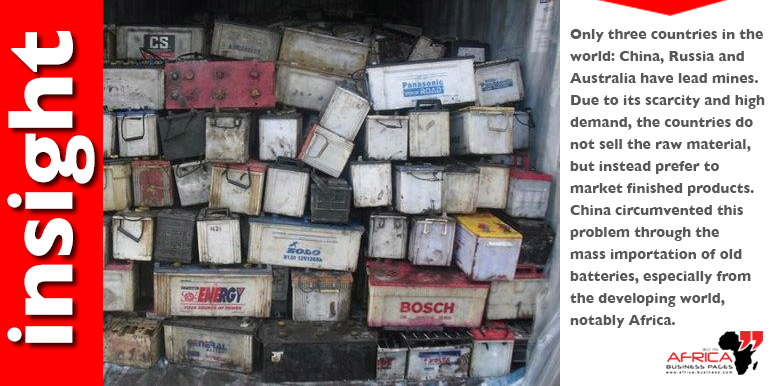
In response to past raw material crises, regional governments have enacted stringent bans on the export of scrap lead. Lead, the core raw material for traditional automotive batteries, is highly scarce, and local manufacturers rely heavily on recycling old batteries. Previously, foreign entities circumvented global hazardous waste protocols by purchasing raw African scrap lead at a premium, starving local factories. Today, heavily enforced export bans have stabilized local production lines, saving thousands of manufacturing jobs in Kenya, Uganda, and Tanzania.
Latest Industry Developments
The African automotive battery market is currently experiencing a technological shift toward Maintenance-Free (MF) and Absorbent Glass Mat (AGM) batteries. As the continent's middle class expands and modern, electronics-heavy vehicles become more common, consumers are abandoning traditional flooded lead-acid batteries. These modern MF and AGM units offer significantly better durability, longer lifespans, and higher resistance to the extreme temperatures and intense vibrations characteristic of African driving conditions.
Furthermore, the booming off-grid solar sector has created an unprecedented parallel demand for battery storage. While specialized deep-cycle batteries are optimal, millions of households and small businesses across Sub-Saharan Africa repurpose heavy-duty automotive batteries for domestic solar power storage. This dual-use phenomenon has exponentially driven up volume sales for wholesale distributors, transforming automotive batteries into a critical household utility rather than just a vehicular component.

Top 7 African Importers of Automotive Batteries
To further protect the domestic market, African nations are heavily investing in the circular economy. State-of-the-art lead recycling plants are being commissioned in major hubs like Nairobi and Lagos. These facilities ensure that end-of-life batteries are safely smelted and reintroduced into the local manufacturing chain, creating a sustainable, closed-loop system that permanently breaks the reliance on volatile global lead commodity prices.
Finally, while the transition to Electric Vehicles (EVs) is steadily making headlines globally, lithium-ion battery technology remains largely confined to the premium and commercial two-wheeler segments within Africa. For the vast majority of the continent's massive internal combustion engine (ICE) fleet, the lead-acid battery remains the undisputed, cost-effective king. Distributors and wholesalers of batteries operating out of major trade hubs like Dubai continue to report record-breaking export volumes to Africa, solidifying the sector's long-term profitability.
Did You Know?