
Chad’s economy has undergone a significant transformation since it officially became an oil-producing nation over two decades ago. The operational success of the Chad-Cameroon pipeline cemented crude oil as the country’s primary foreign currency earner, fundamentally shifting its commercial landscape. Today, the government continues to refine its revenue management frameworks to shield the economy from global oil price volatility and promote sustainable, long-term investments.
While energy dominates exports, cotton, gum arabic, and livestock remain the vital lifeblood of the rural economy. Agriculture accounts for roughly 38 per cent of the country’s total gross domestic product (GDP) and employs the vast majority of the population.
Backed by these foundational sectors, Chad continues to attract targeted foreign direct investment, particularly in energy exploration, telecommunications, and regional infrastructure projects aimed at improving cross-border trade.
Although Chad has largely achieved self-sufficiency in many basic food requirements, processed foodstuffs and manufactured goods still constitute a large portion of the country’s imports. Other major import products include industrial machinery, construction materials, and transportation equipment. Because Chad currently lacks domestic refining capacity to meet all its needs, it still imports refined petroleum products, though strategic investments are underway to address this gap and localize fuel production.
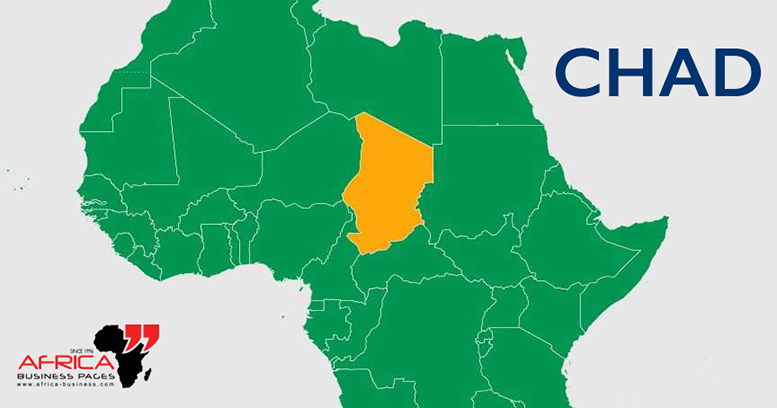
Due to its distance from the sea and its largely desert climate, the country is sometimes referred to as the "Dead Heart of Africa." Chad is divided into three major geographical regions: a desert zone in the north, an arid Sahelian belt in the centre, and a more fertile Sudanese savanna zone in the south. Lake Chad, after which the country is named, remains one of the most critical wetlands and fresh water sources in the region.
Latest Economic Developments
Following a recent period of political transition, Chad’s macroeconomic outlook is stabilizing, supported by a renewed Extended Credit Facility (ECF) arrangement with the International Monetary Fund (IMF). This partnership is designed to bolster economic recovery, manage public debt, and increase social spending. As of 2025 and moving into 2026, real GDP growth is projected to steady around the 3.5% mark. The government is making a concerted push toward economic diversification, aiming to reduce the economy's heavy reliance on crude oil exports by commercializing its vast, untapped agricultural and pastoral potential.
A major focus of recent economic policy has been the modernization of infrastructure and the adoption of renewable energy. Recognizing the high cost of imported fuels, Chad has begun heavily courting foreign investment in solar energy projects to electrify both urban centers and off-grid rural communities. Simultaneously, there is a renewed push to modernize the livestock sector—which accounts for a massive portion of non-oil GDP—by developing local meat processing and dairy facilities, thereby allowing Chad to export higher-value finished products rather than just live animals to neighboring markets like Nigeria and Cameroon.
Industry Sectors in Chad
The oil sector remains the primary engine of Chad's formal economy. The Doba Oil Basin is the historical centre of oil production, but ongoing exploration in the Lake Chad and Bongor basins has opened new frontiers for multinational energy companies. Chad’s economic future relies heavily upon balancing the exploitation of these energy resources with the development of its non-oil sectors.

Chad Real GDP Growth
The monumental Chad-Cameroon pipeline, built at an original cost of $3.5 billion, transports crude oil from the landlocked fields in Chad directly to the marine terminal at Kribi in Cameroon. This vital artery provides Chad with access to global maritime energy markets.
Beyond oil, the solid mining sector in Chad is highly prospective. Large geological areas have been identified as holding potential for gold, bauxite, uranium, silver, and alluvial diamonds. As the government modernizes its mining code, many investment opportunities are arising. Privatization and public-private partnerships are also increasingly taking shape in the telecommunications and agribusiness sectors, offering lucrative entry points for foreign firms participating in the tender process.
Did You Know?